


Blogs
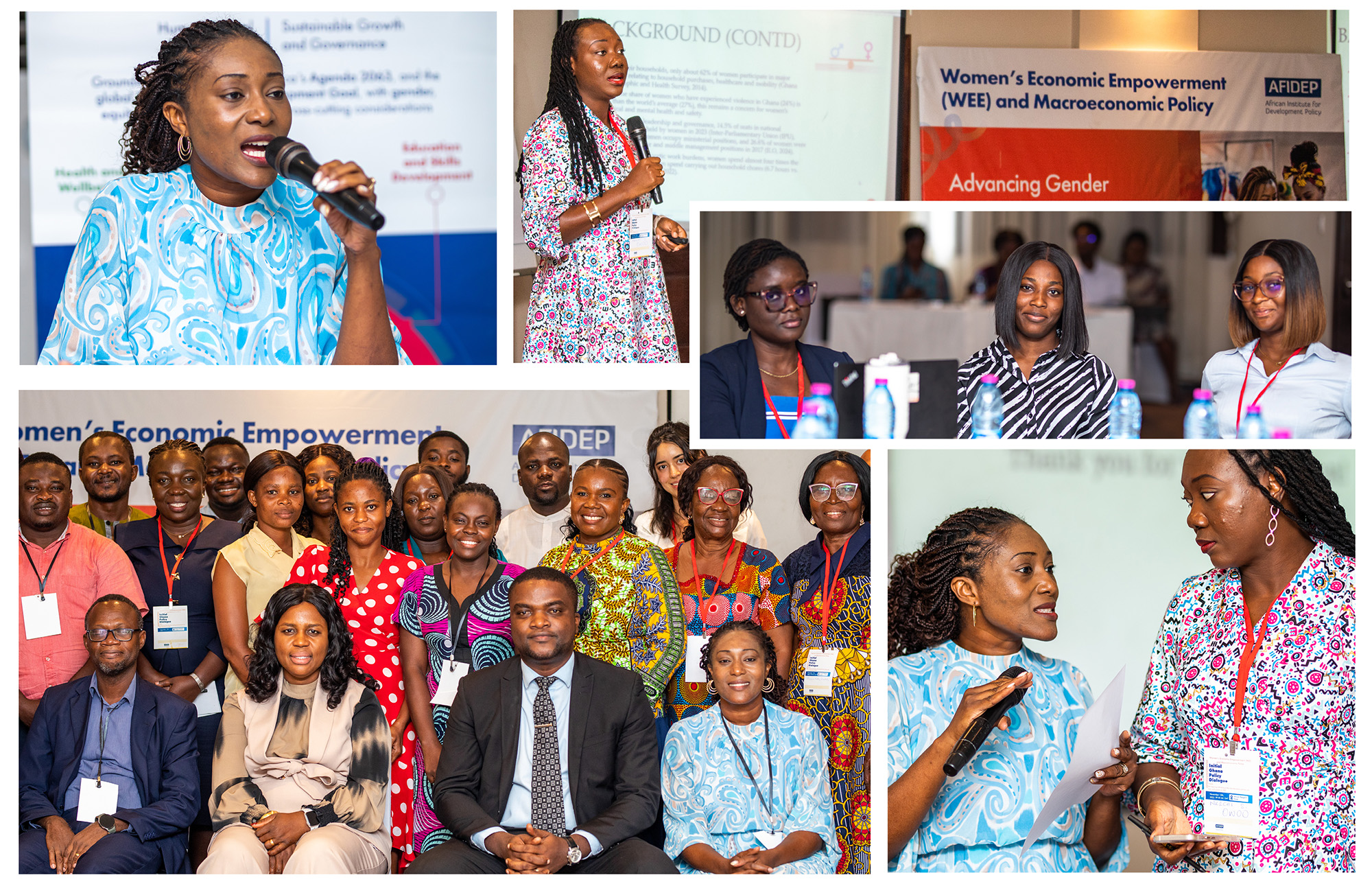
Ghana stands at a critical juncture where advancing women’s economic empowerment represents both a moral imperative and an economic necessity. Despite significant strides in promoting gender equality, Ghanaian women continue to face substantial barriers in accessing equal economic opportunities, limiting both individual prosperity and national growth potential.
An assessment of current barriers limiting women’s economic advancement reveals systemic challenges ranging from limited access to capital and markets to restrictive social norms affecting women entrepreneurs in Ghana. Second, assessing Ghana’s existing macroeconomic policy framework and its gender impact highlights gaps where gender-responsive budgeting could enhance outcomes. Finally, this discussion presents measurable benefits that emerge when women achieve greater economic empowerment, demonstrating clear returns on investment at both the individual and broader levels of the economy.
Current State of Women’s Economic Participation in Ghana
Women’s economic participation in Ghana shows both remarkable progress and persistent challenges across various sectors. Women represent approximately 51% of Ghana’s population, yet their participation in the formal economy remains significantly lower than men’s. Current data reveals that female labour force participation stands at 68%, compared to 78% for males, indicating a 10-percentage-point gender gap that reflects broader structural inequalities.
The agricultural sector employs the highest proportion of Ghanaian women, accounting for nearly 45% of female employment. However, most women work in subsistence farming and informal agricultural activities, which offer limited opportunities for economic advancement. Urban areas show different employment dynamics, with women increasingly entering retail trade, food processing, and textile production. Professional and technical occupations demonstrate the most significant gender disparities, with women representing just 28% of these higher-paying positions.
The wage disparity between men and women in Ghana varies considerably across sectors, reflecting deep-rooted structural inequalities. The overall gender wage gap stands at approximately 32%, meaning women earn roughly 68 cents for every dollar earned by men in comparable positions. Regional variations compound these disparities, with the northern regions showing larger wage gaps due to limited economic diversification and fewer formal sector opportunities. Urban centres like Accra and Kumasi demonstrate smaller wage gaps but higher absolute income differences.
Women’s Access to Formal Financial Services
Financial inclusion represents a critical component of women’s economic empowerment Ghana, yet significant barriers persist. According to Bank of Ghana (BoG) data (2015-2020), about 58-60% of adult women have access to formal financial services, compared to 72% of men. This 12-13-percentage-point gap reflects various systemic challenges including documentation requirements, collateral constraints, and cultural barriers.
Traditional banking relationships remain challenging for many women. Only 32% of women maintain formal bank accounts, and just 18% have accessed credit from formal financial institutions. Microfinance institutions serve approximately 1.2 million women, representing 68% of their client base, yet average loan sizes remain small.
Savings patterns show that women are more likely to participate in informal savings groups (susu) and rotating credit associations, with 43% engaging in such arrangements. These informal mechanisms often provide more accessible and culturally appropriate financial services but come with high risk and lack the security and growth potential of formal financial products.
Female Entrepreneurship and Business Ownership
Business registration data reveals gender disparities in formalisation, with only 23% of women-owned businesses maintaining formal registration compared to 41% of male-owned enterprises. This formalisation gap limits access to government contracts, formal credit, and international markets. Growth patterns show that women-owned businesses tend to remain smaller scale, with 78% employing fewer than five people and generating annual revenues below $5,000. Capital constraints significantly limit expansion potential, as women entrepreneurs typically start businesses with 40% less initial capital than their male counterparts.
Technology adoption among female entrepreneurs shows promising trends, with 34% now using digital platforms for sales and marketing. E-commerce participation has grown by 156% among women-owned businesses since 2020, suggesting significant potential for digital economic inclusion initiatives.
Barriers Limiting Women’s Economic Advancement
Cultural and Social Constraints Affecting Career Progression
In Ghana, traditional gender roles and cultural norms hinder women’s career advancement, particularly in male-dominated fields like construction, tech, and finance. Women are often pressured to prioritise caregiving and household responsibilities, while stereotypes about leadership block their rise to senior roles. Lack of mentorship and exclusion from informal networks further entrench these barriers. Extended family obligations compound the challenge, diverting time and energy from professional growth. Addressing these systemic constraints requires fostering inclusive workplaces, challenging biases, and supporting policies that balance cultural values with economic equity.
Limited Access to Capital and Credit Facilities
Financial exclusion remains a major barrier to women entrepreneurship in Ghana. Traditional banking systems often require collateral that women cannot provide due to limited property ownership rights. Many women lack the credit history necessary to secure business loans, creating a cycle where they cannot access capital to build creditworthiness. Women also face informal lending practices that may exploit their vulnerable economic position. Evidence from the table below highlights key financial barriers facing women entrepreneurs in Ghana. Collateral requirements exclude about 70% of women, while high interest rates of 25–35% APR constrain growth.
| Financial Challenge | Impact on Women’s Businesses |
| Collateral requirements | 70% of women cannot meet property-based requirements |
| High interest rates | Average 25-35% APR limits business growth |
| Limited loan amounts | Keeps businesses at micro-scale level |
| Complex application processes | Deters women with limited formal education |
Educational Disparities and Skills Gaps
Despite improvements in primary education enrollment, significant gender gaps persist in secondary and tertiary education completion rates. Rural areas show particularly stark disparities, where girls are more likely to drop out due to early marriage, pregnancy, or economic pressures to contribute to household income.
Technical and vocational training programmes often channel women into traditionally female-dominated fields such as hairdressing, catering, or tailoring; sectors which offer lower earnings compared to technical trades like plumbing, electrical work, or automotive repair. The low levels of STEM education among women limits their participation in higher-paying sectors. Digital literacy gaps further compound educational barriers even as Ghana’s economy increasingly digitizes, with women excluded from emerging economic opportunities.
Legal and Regulatory Obstacles to Business Ownership
Ghana’s legal framework, while progressively reformed, still contains provisions that can disadvantage women entrepreneurs. Property rights remain complex, with customary law sometimes conflicting with statutory law regarding women’s land ownership. This uncertainty affects women’s ability to use property as collateral for business loans.
Business registration processes, though streamlined in urban areas, remain cumbersome in rural regions where many women operate informal enterprises. The cost and complexity of formalisation often exceed the immediate benefits, particularly for small-scale traders and service providers. Tax policies sometimes inadvertently penalise women-owned businesses. For instance, presumptive tax systems may not account for the seasonal nature of many women-led enterprises, creating cash flow challenges during low-income periods.
Inadequate Childcare and Family Support Systems
Ghana’s formal childcare infrastructure remains underdeveloped, particularly in peri-urban areas where support may be unavailable due to urbanization trends. Workplace policies in many organisations lack family-friendly provisions such as flexible working hours, maternity leave extensions, or on-site childcare facilities.
Further, the burden of caring for elderly family members also disproportionately affects women, as cultural expectations assign them primary responsibility for elder care. This additional responsibility limits women’s mobility and time availability for economic activities, particularly affecting those in their peak earning years.
The African Institute for Development Policy (AFIDEP) works to support Ghana’s journey toward a more inclusive, gender-responsive economic landscape; one that substantially enhances women’s access to economic opportunities and reshapes systemic inequities. This approach not only aligns with global development goals but also reflects a deep understanding of how structural change can be both transformative and sustainable when designed with equity at its core.