


Blogs
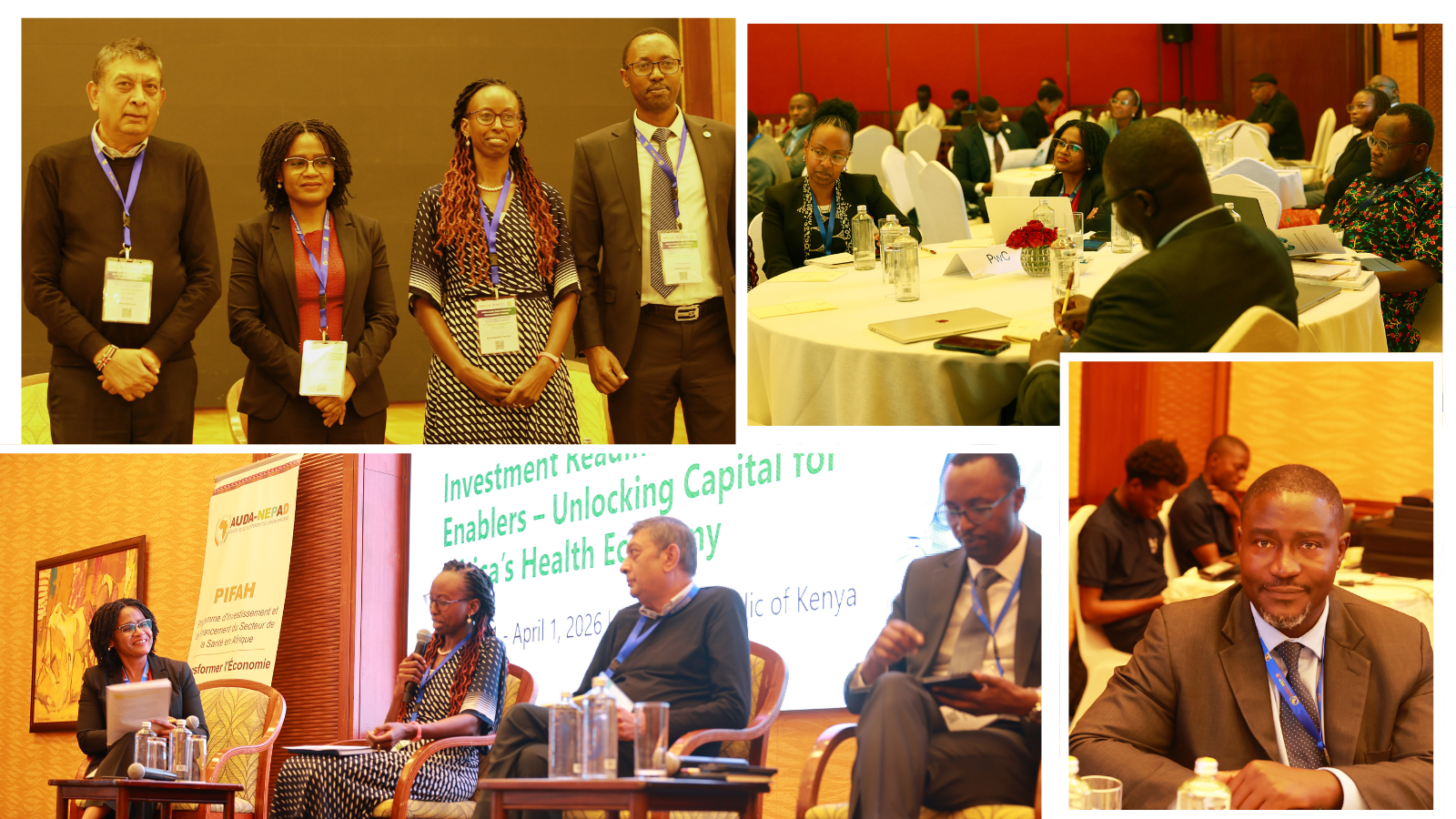
Africa’s health economy, projected to reach US$259 billion by 2030, is more than a sector. It is a strategic investment asset where public and private capital can be deployed to generate both measurable returns and lasting impact to improve people’s lives.
Medicines and other medical supplies and equipment are a central block of any health system. Despite this reality, Africa continues to import more than 70% of the medicines and medical supplies and equipment, a reality that directly translates to gravely inadequate access to the medicines and medical supplies and equipment that its health systems need.
While the obvious solution to this problem is local manufacturing of the medicines, supplies and equipment that Africa’s health systems desperately need, actions needed to nurture and strengthen local pharmaceutical manufacturing are largely missing.
This was the key problem that the High-Level East African Engagement Forum on Financing and Investor Readiness for Local Manufacturing of Priority Medical Products, convened by the Pharmaceutical Society of Kenya (PSK) in collaboration with AUDA-NEPAD, the East African Community (EAC), and regional industry associations, sought to address. The forum advanced the continental Pharmaceutical Manufacturing Plan for Africa (PMPA) under the 24 Priority Medical Products (24 PMP) Initiative. The African Institute for Development Policy (AFIDEP) was proud to be part of these critical conversations that are long overdue.
Africa carries 25% of the global disease burden, yet produces only 3% of its medicines and a mere 0.1% of its vaccines. In Kenya alone, over 70% of medical commodities are imported, many of which could realistically be manufactured locally. The Africa CDC has set an ambitious goal to achieve 60% local manufacturing of health products across the continent by 2040. On the other hand, the 24 Pharmaceutical Manufacturing Plan/Platform (PMP) Strategy provides the continental blueprint to change this narrative. Eastern Africa, including Kenya, Ethiopia, Tanzania, Uganda, and Rwanda, which has been identified as a critical production hub, is anchored by growing regulatory capacity, substantial manufacturing infrastructure, and strategic positioning for continental reach. The groundwork has been laid. What remains is the action of turning intention into investment.
Setting the scene, Mr. Synerre Grey-Johnson, Director, Human Capital, Social and Institutional Development, AUDA NEPAD, noted that despite clear strategies, mapped capacity, and broad stakeholder engagement, East Africa’s pharmaceutical manufacturing sector stands at a decisive crossroads, where the barrier is the gap between viable manufacturers, and the investment readiness and capital needed to turn potential into bankable, and market-ready projects.
Drawing on continental initiatives including the 24 Priority Medical Products framework, the Programme for Investment and Financing in Africa’s Health Sector (PIFAH), and its Home-Grown Solutions and Catalytic Financing platforms, Dr Janet Byaruhanga, Senior Programme Officer, Public Health at AUDA-NEPAD affirmed the institution’s commitment to ensuring that manufacturers achieve investment readiness, projects evolve into bankable pipelines, and capital is deliberately aligned to Africa’s health and industrial priorities.
AFIDEP’s Deputy Executive Director, Dr Rose Oronje, while moderating a panel discussion on Investment Readiness and Market Enablers: Unlocking Capital for Africa’s Health Economy, interrogated what it truly takes to make a pharmaceutical manufacturing projects “bankable” in the East African context. The panel comprised a manufacturer (Mr. Palu Dhanani, Managing Director of Universal Corporation), a financial advisor (Ms June Kago, Associate Director, Deals at PwC), and a representative of the East African Community (EAC) (Dr Eric Nzeyimana, Principal Health Officer at the EAC).
Dr Oronje steered discussion across four investment readiness clinics covering governance and compliance benchmarks, financial structuring for manufacturing projects, technology transfer models, and market offtake and purchase guarantees.
Giving a striking example, Mr. Dhanani illustrated the disconnect with a candid account, “Out of the 24 priority products, we have already achieved quality assurance on 5 of them, but no African government is buying these medicines from us. They are importing these medicines from outside the continent despite our local production, and so we struggle to find the market for our locally-produced medicines.”
On policy implementation, he added, “we have good policies, but the action is missing. If there is action, the rest will automatically follow”. Drawing out the contradiction that manufacturers on the continent know all too well. During COVID-19, a Kenyan manufacturer was supplying quality-assured antiretrovirals to 19 countries through the Global Fund Procurement Programme, yet Kenya’s own government was simultaneously importing the same product from India. When India’s supply chain faltered and stockouts followed, the lesson was stark.
In response to the demand challenge that local pharmaceutical manufacturers are facing, Dr Nzeyimana reported that the EAC’s pooled procurement mechanism, which has prioritized procuring from local manufacturers, has now completed its first phase, and will soon move into the second phase of actual pooled procurements for the EAC region with the next 12 months. Among others, the EAC’s pooled procurement mechanism has already identified 56 priority medicines and set up an online information system for tracking demand in member states (part of its phase 1). This was greatly welcome news for the manufacturers present at the forum, who collectively called on the EAC to fast track the next phase of the mechanism so that they can start pooled procurements locally, but also that they put in place a mechanism for enforcing the implementation of the pooled procurement mechanism by member states.
Ms Kago, while identifying urgent actions needed by Africa’s governments, noted that governments have the critical role of harmonising and standardising regulatory systems across the region, investing in reliable infrastructure including power, transport, and water, providing long-term financial guarantees and concessional financing, and encouraging regional integration through trade policy. She cautioned that governments should not distort pricing through heavy-handed controls, over-subsidise products in ways that create dependency, and be overly protective in ways that crowd out competition and innovation.
The gap between strategy and implementation was perhaps most sharply articulated in a reflection on donor procurement. International donors speak extensively of promoting local manufacturing in their strategy documents, yet when actual procurement figures are examined, the numbers are sobering. Mr Dhanani added that “the Global Fund spends close to US$500 million annually on HIV products alone. Yet purchases from local African manufacturers amount to a negligible fraction of that figure. Having a strategy and implementing that strategy, that is where the problem lies”.
Five Key Takeaways
The forum’s panel discussions converged on five clear imperatives for moving from commitment to action:
- Implement existing policies: Strong frameworks exist, what is missing is implementation.
- African governments must take concerted actions to support local manufacturing: For example, introduce incentives to nurture local pharmaceutical manufacturing; remove persisting barriers to entry; etc.
- Prioritise local procurement: Buying locally must shift from aspiration to enforceable commitment.
- Harmonise regulation regionally: Fragmented systems remain a critical barrier to scale and competitiveness.
- Uphold quality as non-negotiable: Investor confidence is built on consistent adherence to international standards.
Unlocking capital for local health manufacturing sector is not merely an economic opportunity, it is a matter of sovereignty. As geopolitical uncertainties continue to expose the fragility of import-dependent health systems, Africa’s ability to produce its own medicines is increasingly a question of security and self-determination.
AFIDEP is proud to contribute to this vital conversation. As a pan-African policy institute bridging research, policy, and practice, we partner with governments and the international community to drive data-informed decisions that improve lives across Africa. The path from dialogue to bankable, investor-ready projects is clear. What is needed now is the collective will to act.