


The Role of Vector Control in Preventing and Responding to Rhodesian Human African Trypanosomiasis (rHAT) in Malawi
24 April 2020
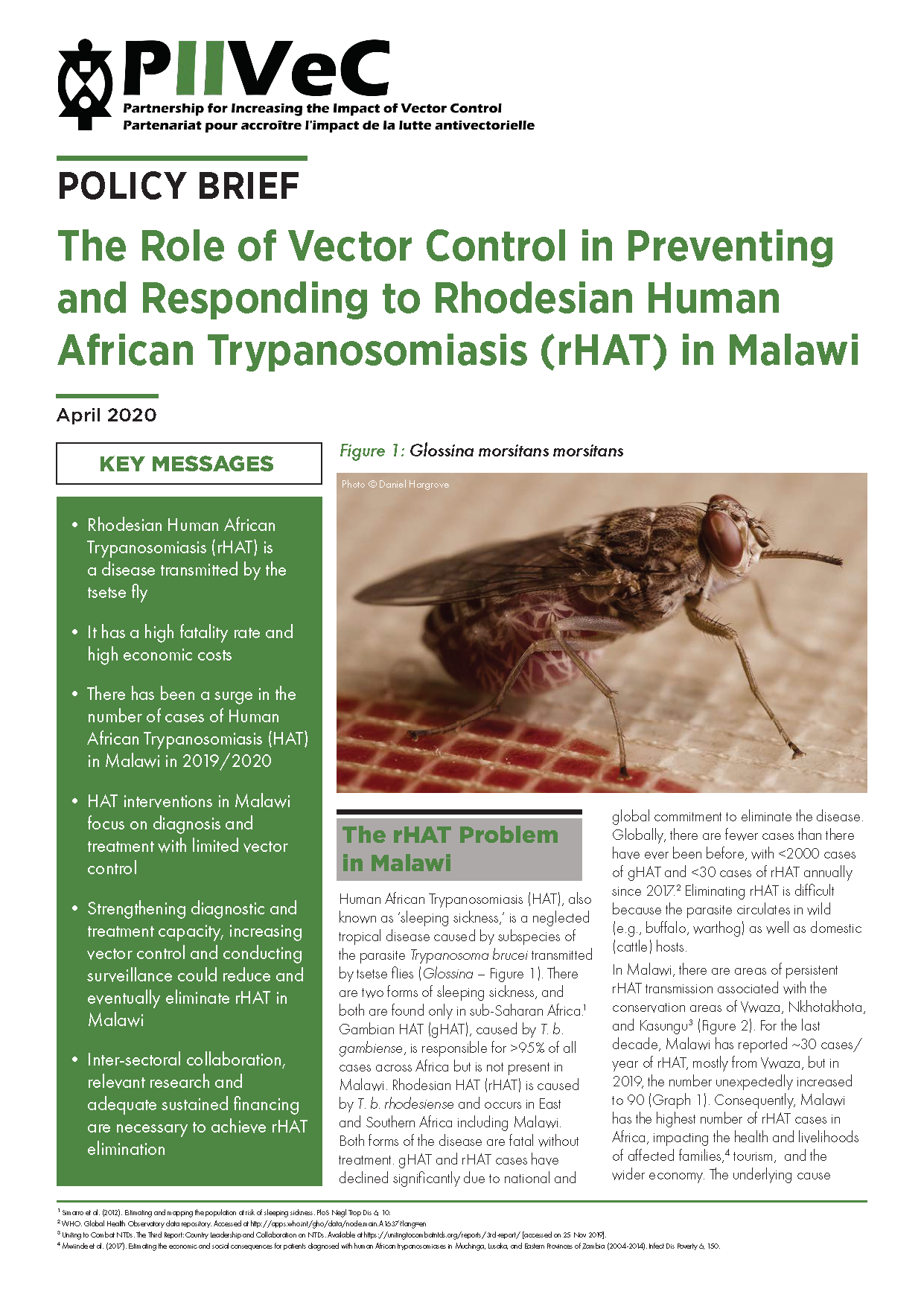
Human African Trypanosomiasis (HAT), also known as ‘sleeping sickness,’ is a neglected tropical disease caused by subspecies of the parasite Trypanosoma brucei transmitted by tsetse flies. There has been a surge in the number of cases of Human African Trypanosomiasis (HAT)in Malawi in 2019/2020. HAT interventions in Malawifocus on diagnosis and treatment with limited vector-control. Strengthening diagnostic and treatment capacity, increasing vector-control and conducting surveillance could reduce and eventually eliminate rHAT in Malawi.
The-Role-of-Vector-Control-in-Preventing-and-Responding-to-Rhodesian-Human-African-Trypanosomiasis-rHAT-in-Malawi.pdfRelated Publications