


Blogs
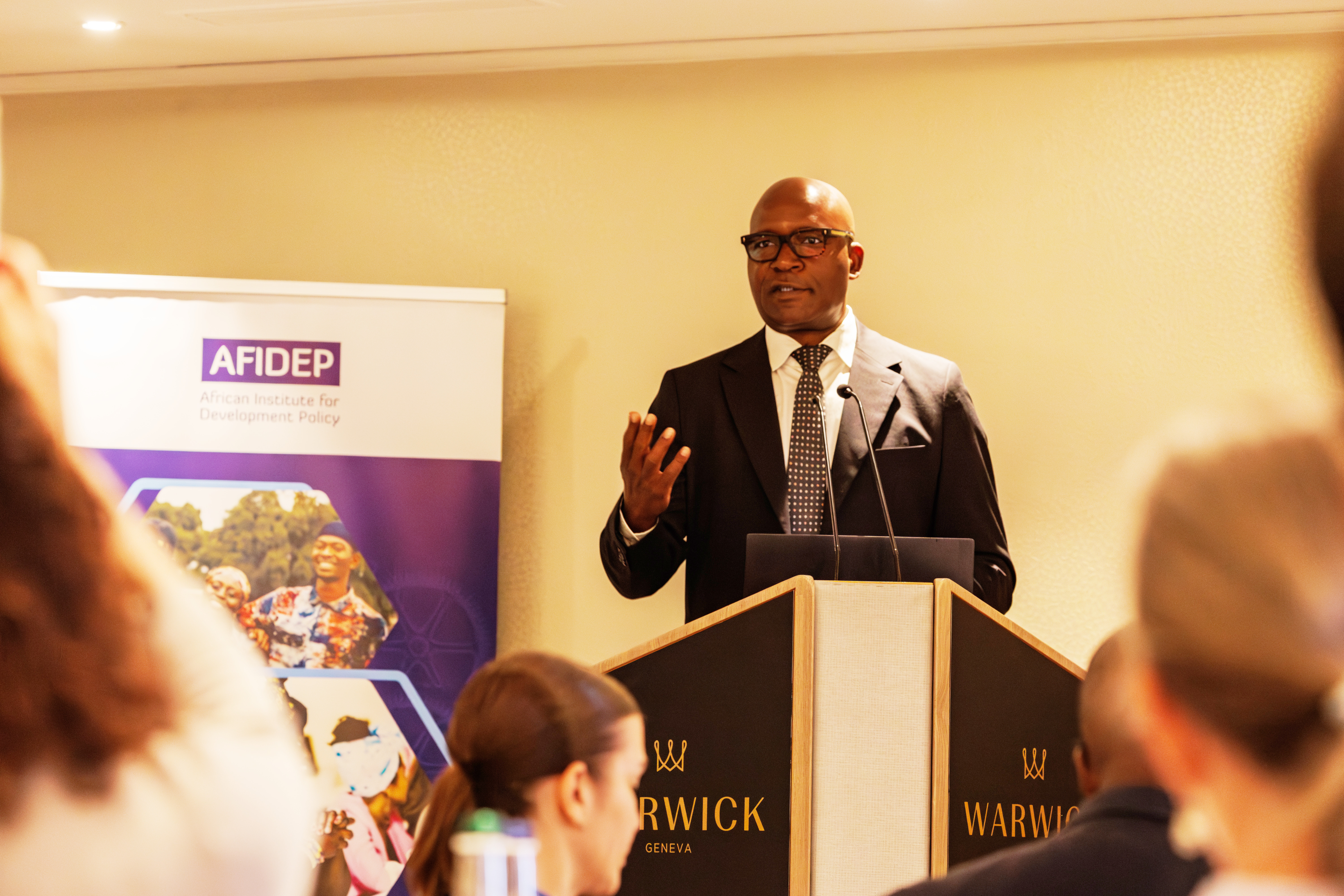
As African countries confront shrinking donor assistance, rising debt burdens, and increasing pressure on health systems, speakers at a high-level meeting during the 79th World Health Assembly (WHA79) in Geneva argued that the future of health in Africa depends on a decisive transition from aid dependency toward domestically driven, resilient, and innovation-oriented health systems.
Convened by African Institute for Development (AFIDEP) in collaboration with African Union Development Agency-New Partnership for Africa’s Development (AUDA-NEPAD) and the Ministry of Health of Uganda, the meeting brought together government officials, regional institutions, development partners, and global health organisations to discuss how African countries can strengthen sustainable health financing while accelerating access to affordable and scalable health innovations.
Across the discussions, participants emphasised that the challenge is no longer simply how to replace declining external aid. Instead, the debate has shifted toward how African countries can build health systems that are financially sustainable, efficient, nationally owned, and capable of withstanding future shocks.
“It is not only about more money but getting more health with the limited resources we have. It is about efficiencies.”
At the session, Dr Eliya Zulu, AFIDEP’s Executive Director, stressed that the conversation on health financing must move beyond calls for increased spending alone. A recurring theme throughout the meeting was that resilience will not come only from mobilising additional resources, but also from improving how existing resources are allocated and used.
Dr Zulu emphasised the importance of evidence-informed policymaking at a time when governments are making increasingly difficult choices about priorities and resource allocation.
The urgency of the discussion was reflected in the broader financing context. External assistance still represents approximately 23% of total health expenditure across Africa, yet official development assistance for health has fallen sharply in recent years. Participants warned that these reductions are already affecting essential services, including immunisation and maternal health programmes, while demand for services continues to rise due to demographic growth, changing disease patterns, and recurring public health emergencies.
“Health is a stimulus for development, and African countries should keep health financing on the political agenda.”
Representing AUDA-NEPAD, Dr Symere Grey Johnson argued that health financing must remain at the centre of political decision-making across the continent. He highlighted the legacy of the 2019 African Leadership Meeting on Investing in Health convened under the leadership of Paul Kagame and the African Union, which helped elevate domestic health financing within continental policy discussions. At the same time, he acknowledged that fiscal space across Africa is under growing pressure from debt servicing obligations, security spending, and competing development priorities.
Dr Johnson pointed to the launch of the Programme for Investment and Financing in Africa’s Health (PIFAH), a continental initiative aimed at mobilising investment into Africa’s health sector, including local manufacturing, diagnostics, and digital health. “We currently have 107 priority projects for financing, including in local manufacturing, diagnostics, and digital health.”
Private sector engagement, he argued, will be essential to unlocking new forms of financing and scaling innovation.
“Our systems were defined by external dependence. We were treated as passive recipients rather than active partners in determining our own strategies.”
Bringing the country perspective, Dr Daniel Kyabayinze warned that many African health systems remain structurally vulnerable due to their dependence on external financing.
For Uganda, as for many African countries, off-budget donor funding and high out-of-pocket spending continue to undermine sustainable progress toward universal health coverage.
Kyabayinze described the COVID-19 pandemic as a turning point in how governments understand health security.
“COVID-19 was our wake-up call. Health is not a social service; it is a national security issue.”
He outlined four pillars emerging from the African Leadership Meeting on Investing in Health: increasing domestic financing, improving efficiency and value for money, promoting equity, and strengthening coordination and accountability.
“Resilience in African health systems is not simply about emergency preparedness or sophisticated hospitals. It is fundamentally about whether ordinary health services continue functioning during extraordinary shocks.”
Dr Jackson Otieno from AFIDEP argued that resilient health systems are not defined primarily by sophisticated hospitals or emergency preparedness plans, but by whether ordinary health services continue functioning during crises.
He identified four pillars of resilience: protecting the health workforce, strengthening primary health care, expanding domestic financing, and building regional manufacturing and supply chains.
“Persistent fragmentation in partnerships and funding slow innovation and impact across Africa.”
Presenting work developed with Ugandan partners, Dr Anne Hoppe argued that innovation requires stronger partner and funding coordination across the entire health value chain.
She described how fragmented funding structures often force institutions to submit multiple proposals to different donors for different stages of the same innovation pipeline, creating administrative burdens that delay evidence generation, implementation and scale-up. A case study on point-of-care HIV viral load testing in Cameroon illustrated both the promise of innovation and the barriers created by fragmented financing systems.
“Successful innovation is not only about the product, it is about building the ecosystem for sustainable access.”
Speaking on behalf of Unitaid, Janet Kristen Ginnard described the organisation’s role in providing catalytic financing to help de-risk promising technologies and accelerate access. She presented on Unitaid’s work on cervical cancer, and showed how its model supporting decentralised cervical cancer screening tools, market shaping efforts to reduce prices, and collaborations with governments to move from small-scale pilots toward nationally owned programs has shown impact.
Similarly, Zachary Katz from CHAI emphasised that future health financing decisions must prioritise not only affordability but also resilience and supply security. Using oxygen systems developed during COVID-19 and multiplex diagnostics platforms as examples, he argued that more integrated approaches can simultaneously reduce costs, strengthen resilience, and improve access.
Rethinking health financing: Public leadership, private sector support
The panel discussion turned toward practical examples and strategies for strengthening domestic financing. Brian Luswata described Uganda’s efforts to improve budget tracking, reduce fragmentation, and digitise financial management systems. In Malawi, Emily Chirwa discussed debates around earmarked taxes for health and the role of the private sector in expanding domestic financing.
Participants acknowledged both the opportunities and tensions associated with increased private sector engagement. While private investment can stimulate innovation and reduce pressure on public budgets, several speakers stressed the importance of transparency, accountability, and regulatory oversight to ensure that commercial interests remain aligned with public health goals.
Toward health sovereignty
In the meeting’s closing remarks, speakers returned repeatedly to the idea of “health sovereignty” — the principle that African countries must increasingly define, finance, and manage their own health priorities. Dr Zulu called for stronger partnerships capable of scaling innovations and strengthening the broader health ecosystem. Meanwhile, Dr Johnson urged participants to focus on implementation and next steps, including regional financing hubs and new discussions around “debt for health” mechanisms.
The message emerging from Geneva was ultimately one of transition rather than crisis alone. While declining aid and fiscal constraints present serious risks, many participants framed the current moment as an opportunity to rethink the foundations of financing health and innovation in Africa. The future, delegates argued, will depend not only on securing additional resources, but on building systems that are more efficient, more locally driven, more innovative, and more resilient to the shocks that increasingly define global health.