


Impact Stories/Case Studies
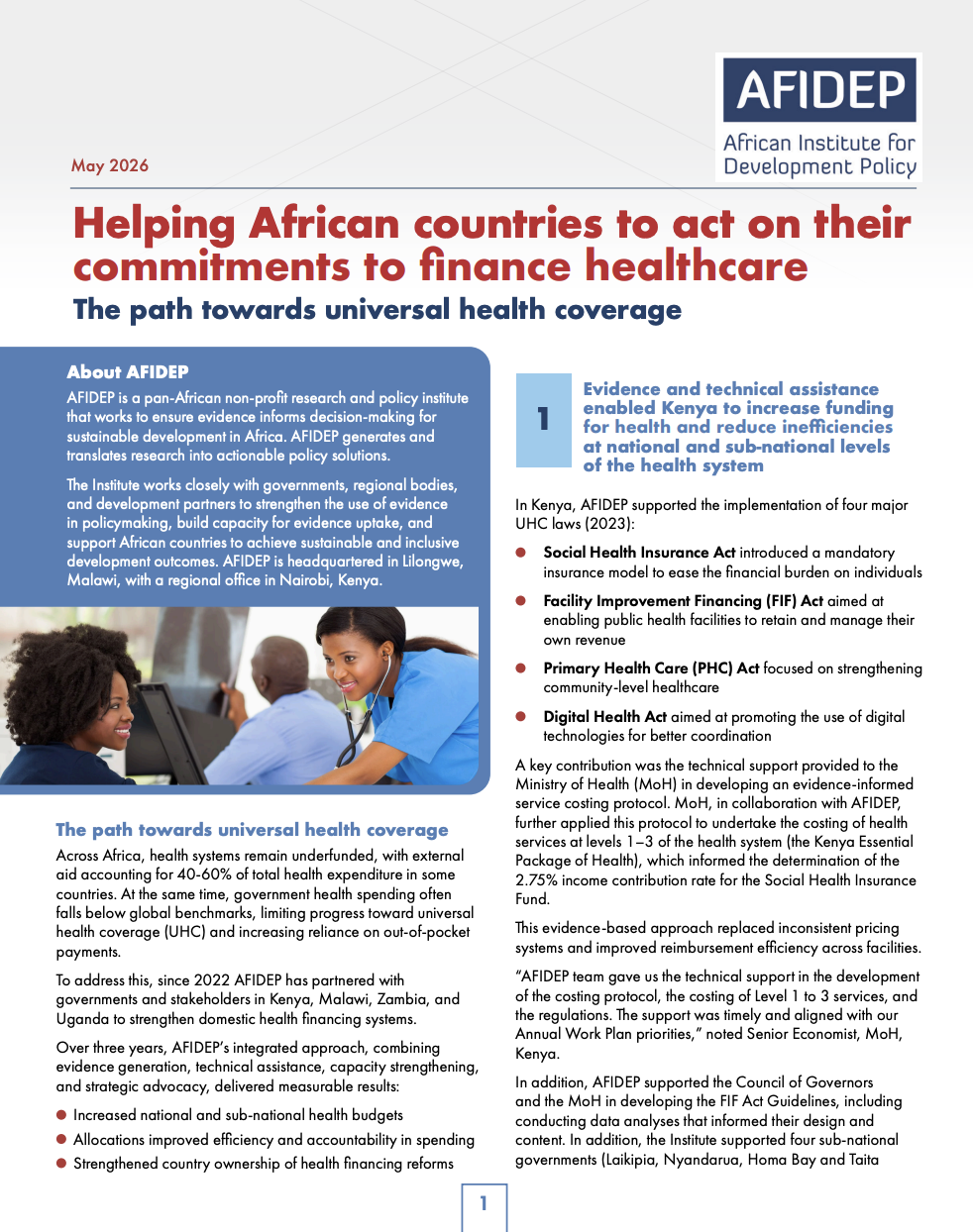
Since 2022, AFIDEP has partnered with governments and stakeholders in Kenya, Malawi, Zambia, and Uganda to strengthen domestic health financing systems and accelerate progress toward universal health coverage (UHC). Through evidence generation, technical assistance, capacity strengthening, and strategic advocacy, AFIDEP has helped increase health budgets, improve efficiency and accountability in spending, and strengthen country ownership of financing reforms. The impact includes faster access to funds for health facilities, stronger programme-based budgeting, increased primary healthcare allocations, and millions of dollars mobilized for critical health services. This publication highlights how evidence-informed policymaking is helping African countries build more resilient, equitable, and sustainably […]
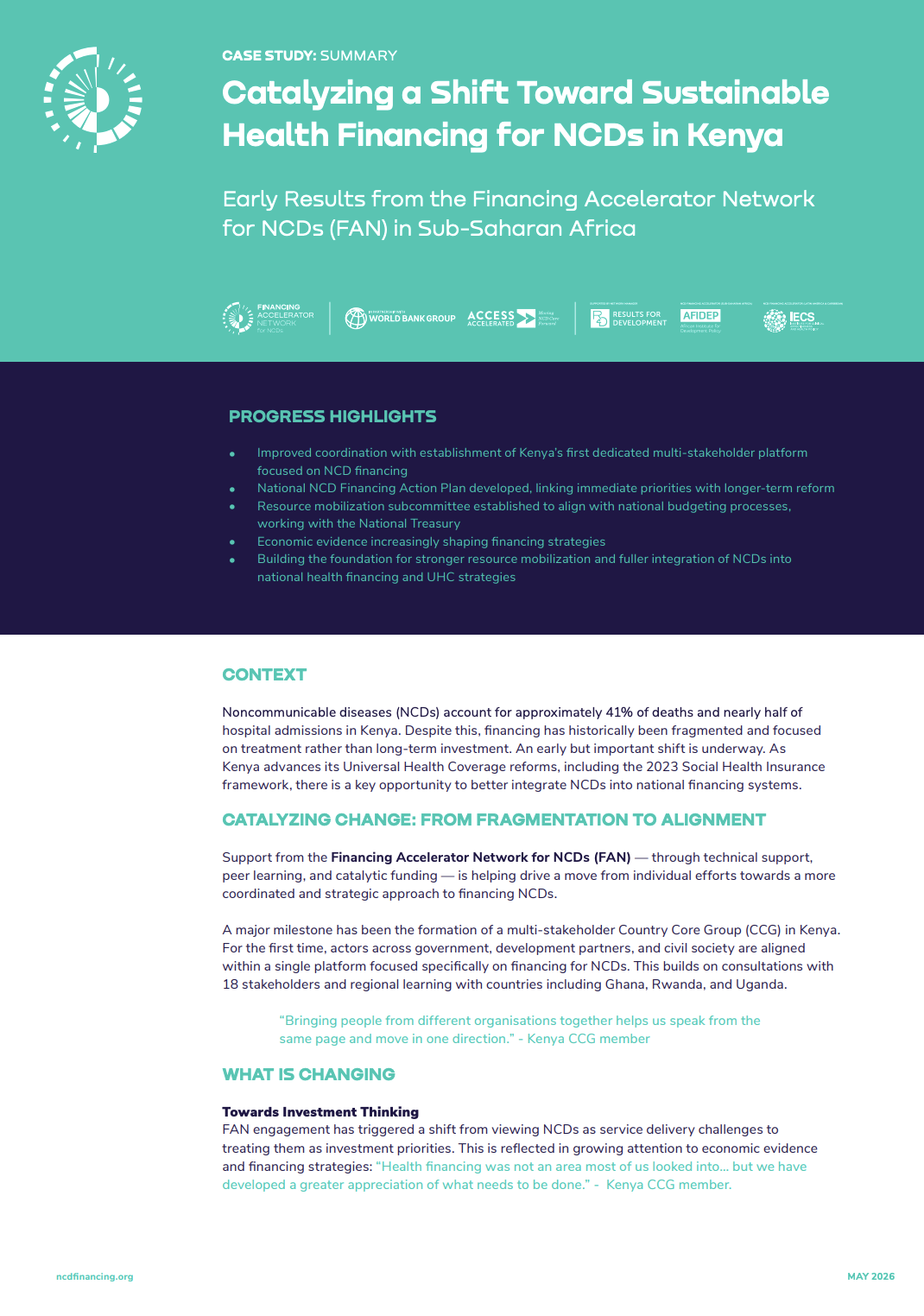
As non-communicable diseases (NCDs) continue to place a growing burden on Kenya’s health system, sustainable financing has become essential to ensuring effective prevention, treatment, and long-term care. This case study highlights how AFIDEP, the regional host of the Financing Accelerator Network for Non-Communicable Diseases (FAN) for Sub-Saharan Africa, is helping Kenya strengthen domestic financing for NCDs through technical support, peer learning, and catalytic funding. By fostering stronger coordination among key stakeholders, promoting the use of economic evidence, and supporting innovative approaches to resource mobilisation, FAN is helping shift the conversation from disease management to strategic investment in health. The story […]
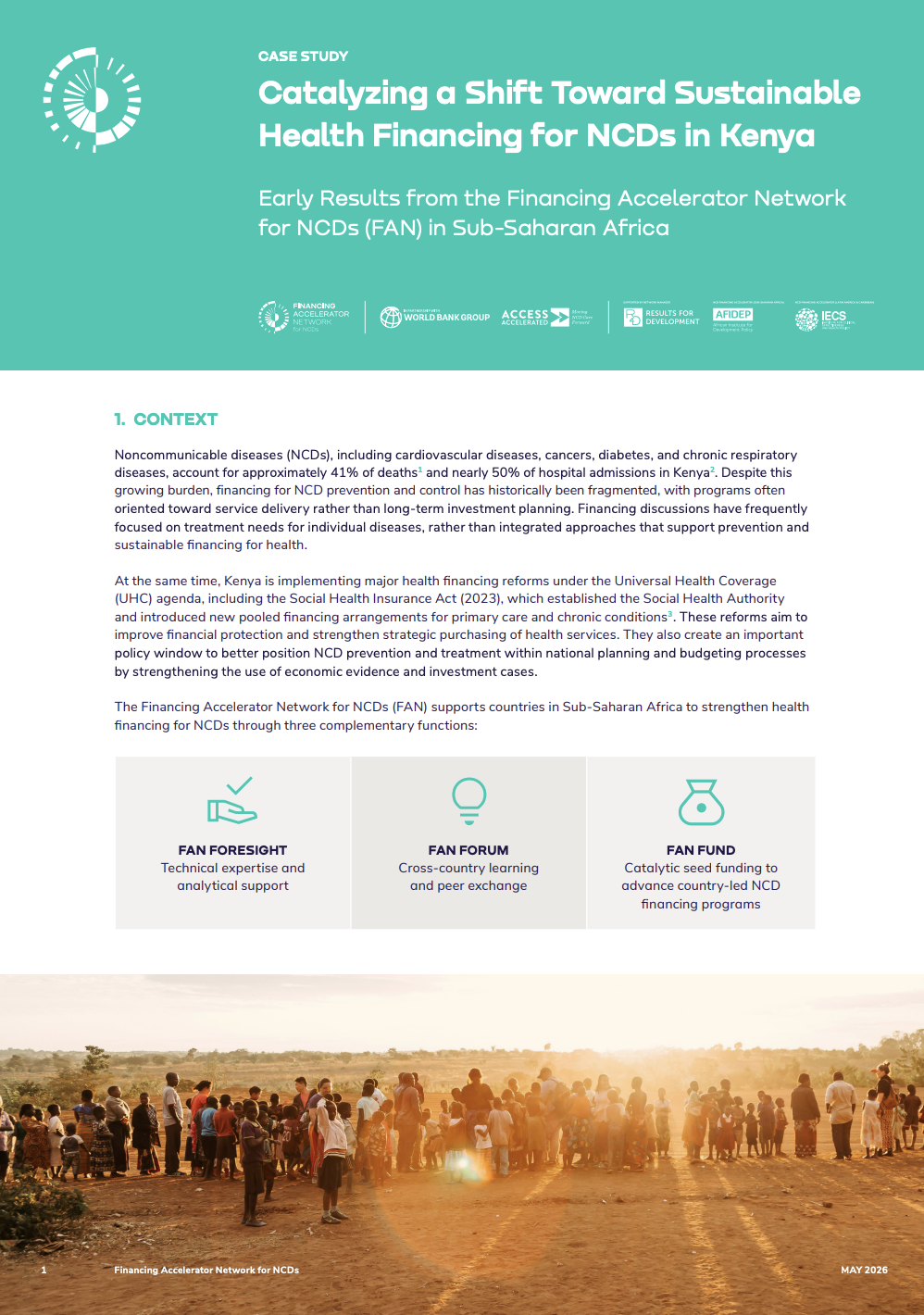
As non-communicable diseases (NCDs) continue to place a growing burden on Kenya’s health system, sustainable financing has become essential to ensuring effective prevention, treatment, and long-term care. This case study highlights how AFIDEP, the regional host of the Financing Accelerator Network for Non-Communicable Diseases (FAN) for Sub-Saharan Africa, is helping Kenya strengthen domestic financing for NCDs through technical support, peer learning, and catalytic funding. By fostering stronger coordination among key stakeholders, promoting the use of economic evidence, and supporting innovative approaches to resource mobilisation, FAN is helping shift the conversation from disease management to strategic investment in health. The story […]
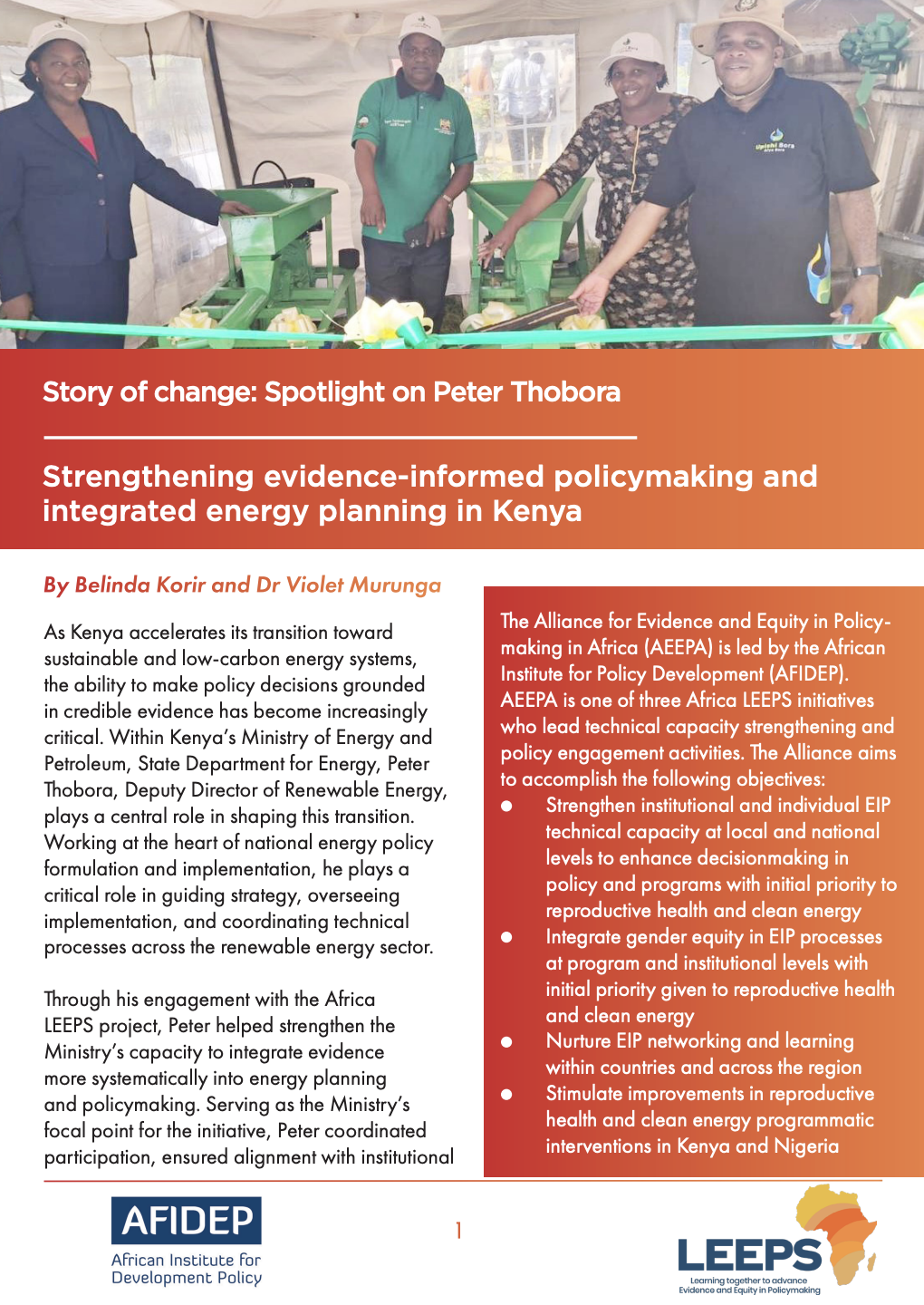
As Kenya advances its renewable energy and climate ambitions, evidence-informed policymaking is essential for delivering sustainable and inclusive energy solutions. This story highlights the journey of Peter Thobora, Deputy Director of Renewable Energy at the Ministry of Energy and Petroleum, whose participation in the Africa LEEPS project by AFIDEP strengthened his capacity to analyse, synthesise, and apply evidence in energy planning and policy development. From supporting the review of Kenya’s Energy Policy to advancing the use of the Kenya Carbon Emission Reduction Tool (KCERT 2050) and promoting gender-responsive energy planning, Peter’s experience demonstrates how building evidence-use capacity can drive more […]
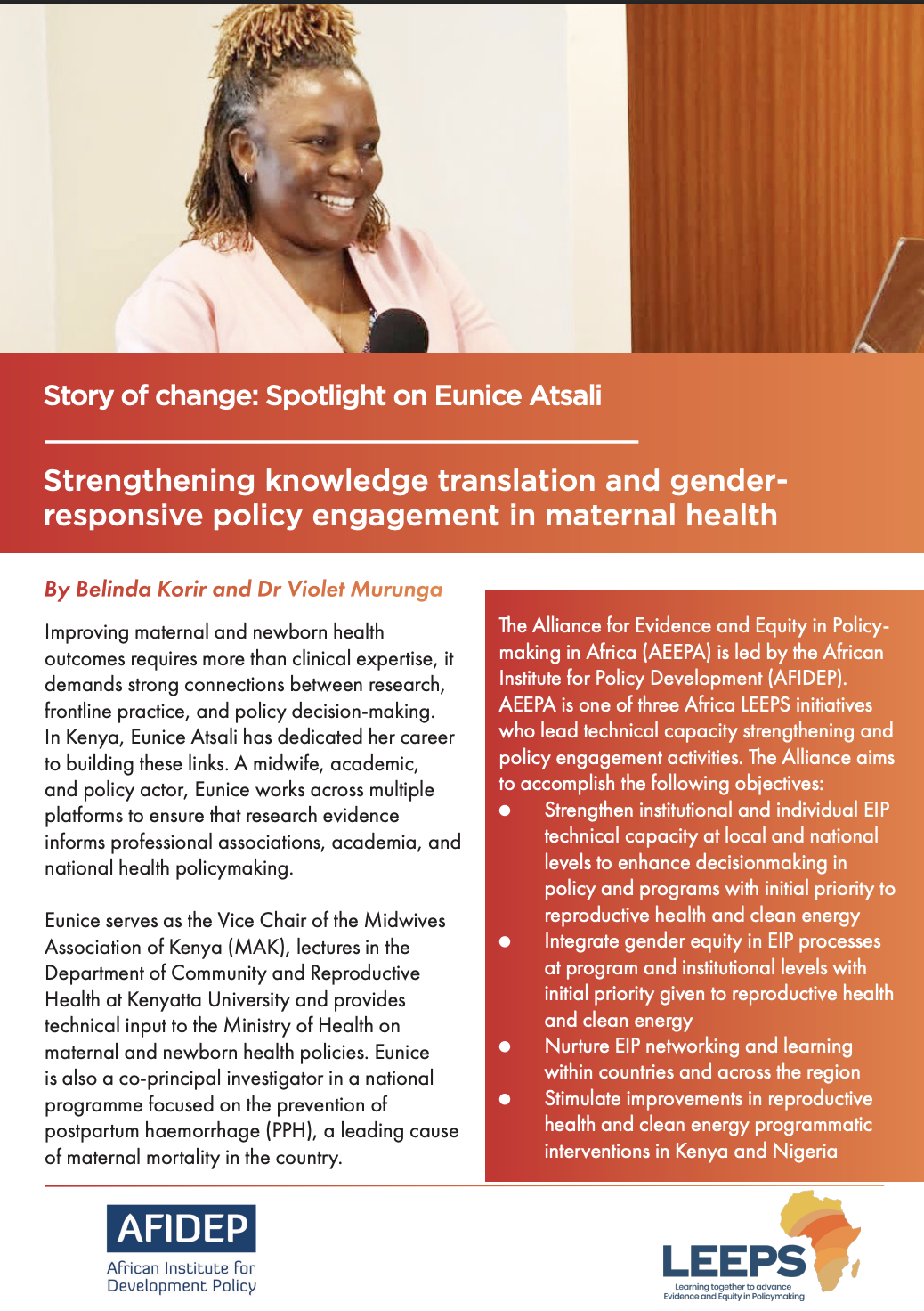
How can research evidence be translated into meaningful action for maternal and newborn health? This inspiring story highlights the journey of Eunice Atsali, a midwife, academic, and policy advocate, whose participation in the Africa LEEPS Evidence-Informed Decision Making (EIDM) training strengthened her ability to translate evidence into policy, practice, and advocacy. From supporting the development of policy briefs and mentoring midwives to advancing gender-responsive decision-making and scaling up life-saving postpartum haemorrhage interventions across Kenya, Eunice’s experience demonstrates the power of evidence-informed leadership in driving health systems change. Download the impact story for details:

This story of change is part of a series that illustrates the early results of a 2-Week Virtual LEEPS Evidence-Informed and Equity in Policymaking Training Workshop delivered to members of the Africa Research Impact Network (ARIN) who attended the training. The stories of change illustrate how the training has improved the training of researchers in higher learning institutions, grant writing, advocacy strategies, research into policy and practice processes and project/ programme design and implementation. Download:
This story of change is part of a series that illustrates the early results of a 2-Week Virtual LEEPS Evidence-Informed and Equity in Policymaking Training Workshop delivered to members of the Africa Research Impact Network (ARIN) who attended the training. The stories of change illustrate how the training has improved the training of researchers in higher learning institutions, grant writing, advocacy strategies, research into policy and practice processes and project/ programme design and implementation. Download:

This story of change is part of a series that illustrates the early results of a 2-Week Virtual LEEPS Evidence-Informed and Equity in Policymaking Training Workshop delivered to members of the Africa Research Impact Network (ARIN) who attended the training. The stories of change illustrate how the training has improved the training of researchers in higher learning institutions, grant writing, advocacy strategies, research into policy and practice processes and project/ programme design and implementation. Download:

This story of change is part of a series that illustrates the early results of a 2-Week Virtual LEEPS Evidence-Informed and Equity in Policymaking Training Workshop delivered to members of the Africa Research Impact Network (ARIN) who attended the training. The stories of change illustrate how the training has improved the training of researchers in higher learning institutions, grant writing, advocacy strategies, research into policy and practice processes and project/ programme design and implementation. Download:

This story of change is part of a series that illustrates the early results of a 2-Week Virtual LEEPS Evidence-Informed and Equity in Policymaking Training Workshop delivered to members of the Africa Research Impact Network (ARIN) who attended the training. The stories of change illustrate how the training has improved the training of researchers in higher learning institutions, grant writing, advocacy strategies, research into policy and practice processes and project/ programme design and implementation. Download:

This story of change is part of a series that illustrates the early results of a 2-Week Virtual LEEPS Evidence-Informed and Equity in Policymaking Training Workshop delivered to members of the Africa Research Impact Network (ARIN) who attended the training. The stories of change illustrate how the training has improved the training of researchers in higher learning institutions, grant writing, advocacy strategies, research into policy and practice processes and project/ programme design and implementation. Download: