


Blogs
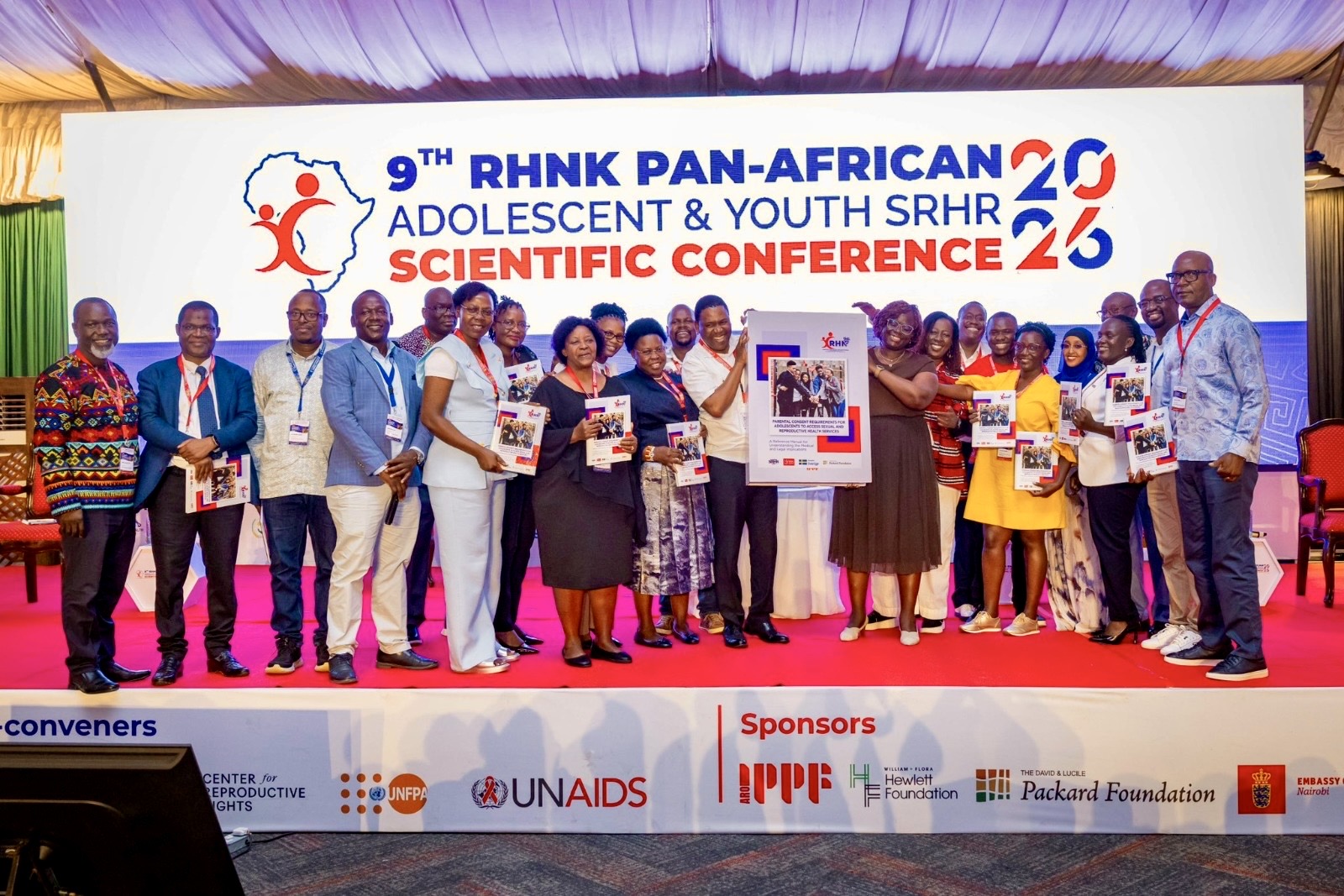
As Africa navigates a rapidly shifting socio-political and economic landscape, the 9th Reproductive Health Network Kenya (RHNK) Conference brought together more than 750 delegates united by a shared conviction: strengthening sexual and reproductive health and rights (SRHR) is not a peripheral concern but the foundation upon which young people can claim their agency, realise their full potential, and meaningfully contribute to shaping the continent’s future.
Contributing to this important discussion, the African Institute for Development Policy (AFIDEP)’s Executive Director, Dr Eliya Zulu, reinforced the urgency of placing Africa’s youth at the centre of the continent’s development agenda. He emphasised that the decisions made today on financing, policy, and accountability will determine whether Africa’s rapidly growing youth population becomes the engine of the continent’s transformation or a missed opportunity.
During the opening ceremony, Dr Zulu painted a compelling picture of Africa’s demographic future. According to the United Nations World Population Prospects 2022, Africa’s population is projected to grow from approximately 1.5 billion people today to nearly 2.5 billion by 2050. In sub-Saharan Africa alone, the population is expected to reach 2.09 billion by 2050, including nearly 700 million young people aged 10 to 24. These trends position Africa as home to the world’s youngest and fastest-growing population, presenting a unique opportunity to harness demographic growth for economic transformation and sustainable development.
For Dr Zulu, however, these figures represent far more than population growth. They signal a defining moment for the continent. While Africa’s abundant natural resources often attract global attention, he argued that the continent’s greatest asset is its rapidly growing youthful population. Yet potential alone is not enough. The real challenge lies in transforming this population into a healthy, educated, skilled, and economically empowered generation capable of driving the social and economic transformation envisioned in Agenda 2063 and national development strategies across the continent.
Whether Africa realises this vision will depend largely on the investments made today in education, health, livelihoods, and opportunities that enable young people to innovate, participate, and lead. It also requires a deliberate commitment to creating environments where young people can thrive and contribute meaningfully to society.
Central to achieving this vision is the use of evidence to inform policies, programmes, investments, and decision-making. As countries grapple with competing development priorities and increasingly constrained resources, evidence plays a critical role in identifying what works, for whom, and under what circumstances. It enables policymakers to move beyond assumptions and make informed decisions about where to allocate resources to achieve the greatest impact.
Beyond informing decision-making, evidence strengthens accountability by providing a basis for measuring progress, tracking results, and ensuring that commitments made to young people translate into meaningful action. Evidence not only helps governments and development partners understand challenges but also enables them to monitor whether interventions are producing the intended outcomes.
At the same time, the evidence points to significant challenges that continue to affect young people across the continent. Across sub-Saharan Africa, adolescent fertility rates remain among the highest in the world, while millions of young people continue to face barriers to accessing education, sexual and reproductive health information, and essential health services. Child marriage remains widespread, with more than one-third of women in the region married before the age of 18. In some parts of West and Central Africa, the proportion exceeds 40 percent. Furthermore, many girls do not complete secondary education, despite schooling being one of the strongest protective factors against early pregnancy and child marriage.
Despite these challenges, there is growing reason for optimism. Countries are no longer asking whether progress is possible. Instead, increasing evidence demonstrates that meaningful improvements in adolescent sexual and reproductive health and rights can be achieved even in resource-constrained settings.
Drawing on findings from the Adolescent Sexual and Reproductive Health Exemplars (ASHER) initiative, Dr Zulu highlighted how Malawi, Rwanda, Ghana, Cameroon, India, and Nepal achieved remarkable reductions in adolescent fertility despite facing many of the same socioeconomic challenges as their peers. The research revealed that success was never driven by a single intervention. Rather, it was the combination of multiple efforts that produced results. This included ending child marriage, keeping girls in school, providing youth-friendly health services, and ensuring access to comprehensive sexuality education.
When researchers analysed the relative contribution of these factors, ending child marriage and keeping girls in school emerged as the most influential drivers of progress, supported by the availability of services and information. The findings reinforce the importance of adopting comprehensive, evidence-informed approaches that address the interconnected barriers affecting young people’s health and well-being.
Dr Zulu also highlighted the strong economic case for investing in adolescent sexual and reproductive health and rights. Beyond the health and social benefits, evidence from AFIDEP’s Family Planning Impact Consortium demonstrates that family planning contributes significantly to women’s labour force participation, financial autonomy, and economic productivity.
Further evidence comes from a recent study conducted by AFIDEP, the National Council for Population and Development, and UNFPA Kenya, which found that adolescent pregnancy and early marriage cost Kenya more than US$3.58 billion annually in forgone labour productivity and tax revenues. These findings reinforce a simple yet powerful message: investing in adolescents is not merely a health expenditure; it is an investment in human capital, economic growth, and sustainable development.
For Dr Zulu, however, generating evidence is only the first step. Real impact is achieved when evidence informs policy, policy shapes budgets, budgets support implementation, and implementation is continuously monitored to ensure results for young people. The journey from evidence to impact requires deliberate action and accountability at every stage of the policy and programme cycle.
In closing, Dr Zulu called on governments to embed evidence reviews into national planning and budgeting processes, remove legal and policy barriers that restrict young people’s access to health and education services, and establish protected domestic financing for adolescent and youth sexual and reproductive health and rights (AYSRHR).
Above all, he urged governments, development partners, and other stakeholders to recognise adolescents and young people not merely as beneficiaries of programmes, but as genuine partners in designing, implementing, and evaluating them. Only through such inclusive and evidence-driven approaches can Africa unlock the full potential of its young people and transform demographic opportunity into sustainable development outcomes for generations to come.
For AFIDEP, championing investments in adolescents is central to its mission of promoting evidence-informed policies and sustainable development across Africa. By advocating for stronger policies, increased financing, and greater accountability for adolescent-focused interventions, AFIDEP seeks to ensure that Africa’s young people are equipped to contribute meaningfully to economic growth, social progress, and the achievement of national and regional development goals.