


Blogs
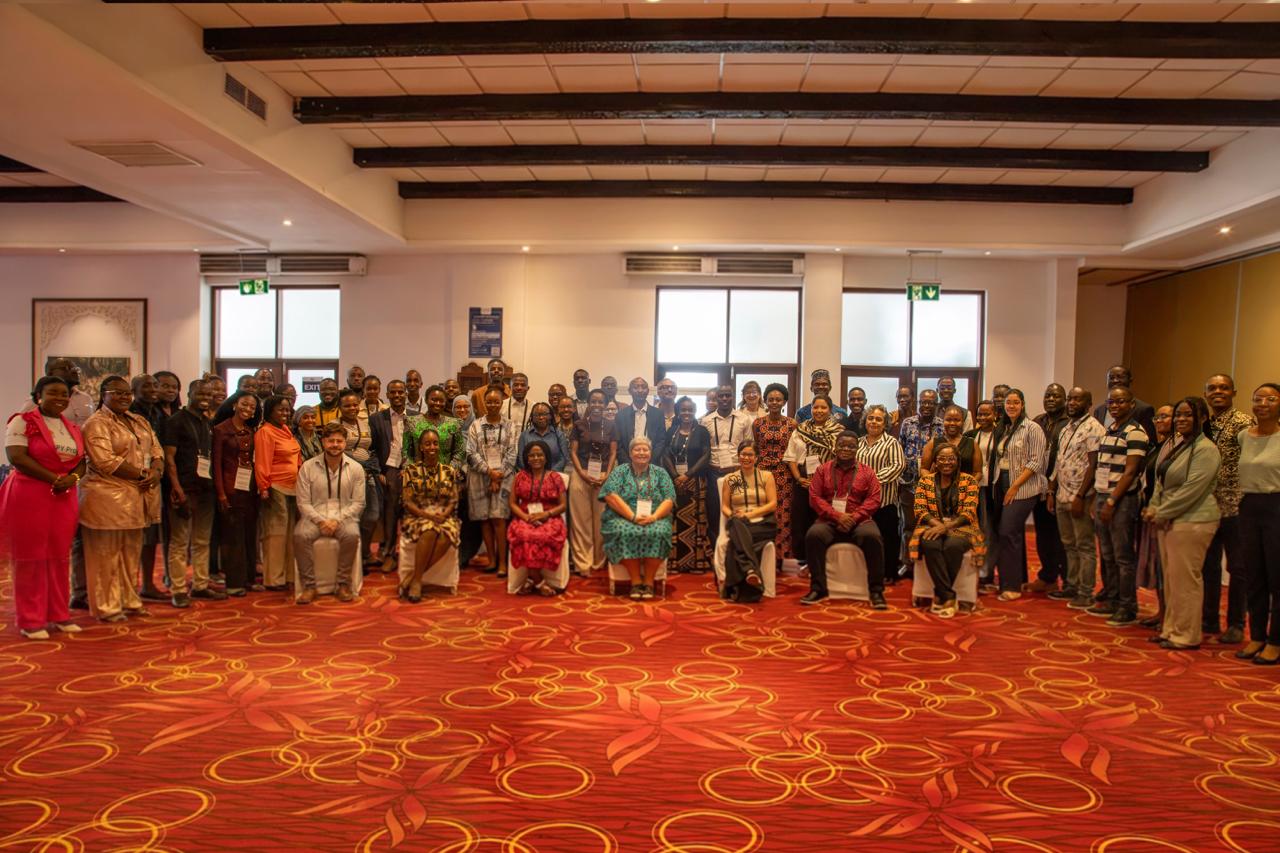
African Institute for Development Policy (AFIDEP) joined researchers, regional partners, policy experts, and youth champions in Mombasa in August 2026 for the Youth Futures Community of Practice (CoP) convening. While the coastal setting provided an opportunity to connect beyond the formal sessions -including watching the sunrise and the evenings spent playing beach volleyball – the week was anchored in thoughtful dialogue, strategic alignment, and a shared commitment to addressing the critical challenges facing young people across Africa in their quest for dignified and fulfilling work.
The event brought together perspectives from across the Youth Futures Research pillars and created a space to reflect on what evidence tells us, where current approaches are falling short, and what it will take to translate evidence into meaningful change.
Here are key takeaways, from the week:.
1. Navigating the pace of AI development in Africa
Artificial intelligence (AI) is rapidly reshaping the nature of work and livelihood opportunities across the continent. Looking at the rapid growth of AI, what decisions can we make as a continent to fully reap its benefits? As technology advances, Africa risks falling behind—with the digital gap widening rather than closing—unless we organise ourselves intentionally to seize this opportunity. We are witnessing transformative economic shifts, from the rise of AI-powered one-person companies generating real income and asset growth, to Jevons Paradox, where increased technological efficiency lowers costs and sharply drives up demand. Yet, AI remains fundamentally undervalued and underutilised, with too many brilliant concepts stalling between idea and production.
2. Moving beyond policy design to implementation
A central message through every session was a stark reality: Africa does not lack well-crafted youth policies; it lacks consistent, accountable implementation. Discussions focused heavily on political economy analysis—unpacking why policies stall between adoption and implementation, and how our individual research pillars can better support policy rollout.
3. Anchoring strategy in grounded research
The convening provided a vital space to review qualitative evidence and regional indicators surrounding youth labour markets, education quality, and sustainable livelihoods.
Discussions reinforced that for youth policies to be effective, data must be actionable, context-specific, and directly informed by the lived realities of young people—particularly those in marginalized communities.
Evidence becomes most valuable when it can inform decisions and ultimately improve people’s lives. As Youth Advisory Committee (YAC) member Aloysious Oraku from Uganda emphasised: “evidence must move beyond research reports into policies, programmes, budgets, and ultimately, young people’s lives.”
This means strengthening the connection between research, decision making, implementation and accountability.
4. Data-driven pathways for the future of work
Navigating the future of work requires bridging the gap between information and action. Vast amounts of data on emerging sectors, changing skill requirements, and market demand are published constantly, yet very little of it reaches young people when they are making critical career decisions.
To unlock sustainable economic opportunities, we should empower youth to actively analyse and leverage market data to guide their educational and career choices. Aligning individual choices with future economic trajectories ensures the workforce is not just reactive to labour market shifts, but ready to lead them.
The event also featured an interactive demonstration of Chanua, a career guidance AI tool exploring how data-driven tools can guide young people in real time.
5. Building ecosystems and navigating political spaces for policy impact
Bridging the gap between high-level policy spaces and local realities requires intentional ecosystem building. Bringing together research teams, country partners, and policy advocates fostered rich cross-country learning and laid the groundwork for joint action. But one important lesson emerged: evidence does not speak for itself.
Researchers and advocates need to understand government decision-making processes, budget cycles, and institutional timelines—and engage early enough to influence decisions. This means building meaningful relationships with technical working groups, parliamentary committees on youth and employment, and key ministries (such as Labor, Youth, and Finance) before key decisions are made.
Discussions also emphasised the importance of regional platforms. Platforms like African Union (AU) and Regional Economic Communities like the East African Community (EAC) and the Southern African Development Community (SADC), can provide important spaces for countries to align priorities and speaks with a unified voice.
6. Meaningful youth engagement at the core
Perhaps the strongest cross-cutting message from the convening was the need to move from consulting young people to genuinely co-designing with them.
Youth engagement should not be treated as an add-on or a box-checking exercise; young people must be active participants in generating evidence, monitoring progress, and holding institutions accountable.
When young people take evidence into policy networks and decision-making spaces, they transform abstract data into lived realities and urgent calls for accountability.
This commitment was powerfully reflected by members of the Youth Advisory Committee (YAC) following the convening as noted by Yemisrach Elias (YAC Ethiopia) –
“For me, one of the most valuable parts of the week was the meaningful conversations, the moments of questioning, challenging assumptions, sharing experiences, and learning from one another. It was a reminder that building better futures for young people cannot happen in isolation. It requires collaboration, evidence, lived experiences, and, most importantly, ensuring that young people are at the centre of the conversation.”
Looking ahead
The Mombasa meeting was the beginning of deeper collaboration and collective action. The ultimate goal of this work goes beyond counting numbers or producing reports; it is about transforming the broader ecosystem to ensure young Africans access dignified and fulfilling work.
Reaching this goal requires continuous listening, non-extractive research, and putting indigenous, localized knowledge at the centre—with a deliberate focus on marginalized groups, including young women, persons with disabilities, refugees, and displaced persons. The insights, relationships, and evidence built in Mombasa set the foundation to turn our shared conversations into lasting, systemic change.
Youth Futures in Dignified and Fulfilling Work in Africa (Youth Futures) Community of Practice brings together four complementary areas of work: youth preparedness; indigenous enterprises in the informal economy; policy and industrial regulation; and a data repository. It provides a platform for shared learning, stronger collaboration across the research pillars, and the practical use of evidence to inform programming at scale. AFIDEP is leading the policy and industrial regulation pillar of the Youth Futures Research Project with the goal of providing evidence that transforms youth employment in Africa by addressing gaps in policies and regulatory frameworks to enable dignified and fulfilling work for young people.