


Blogs
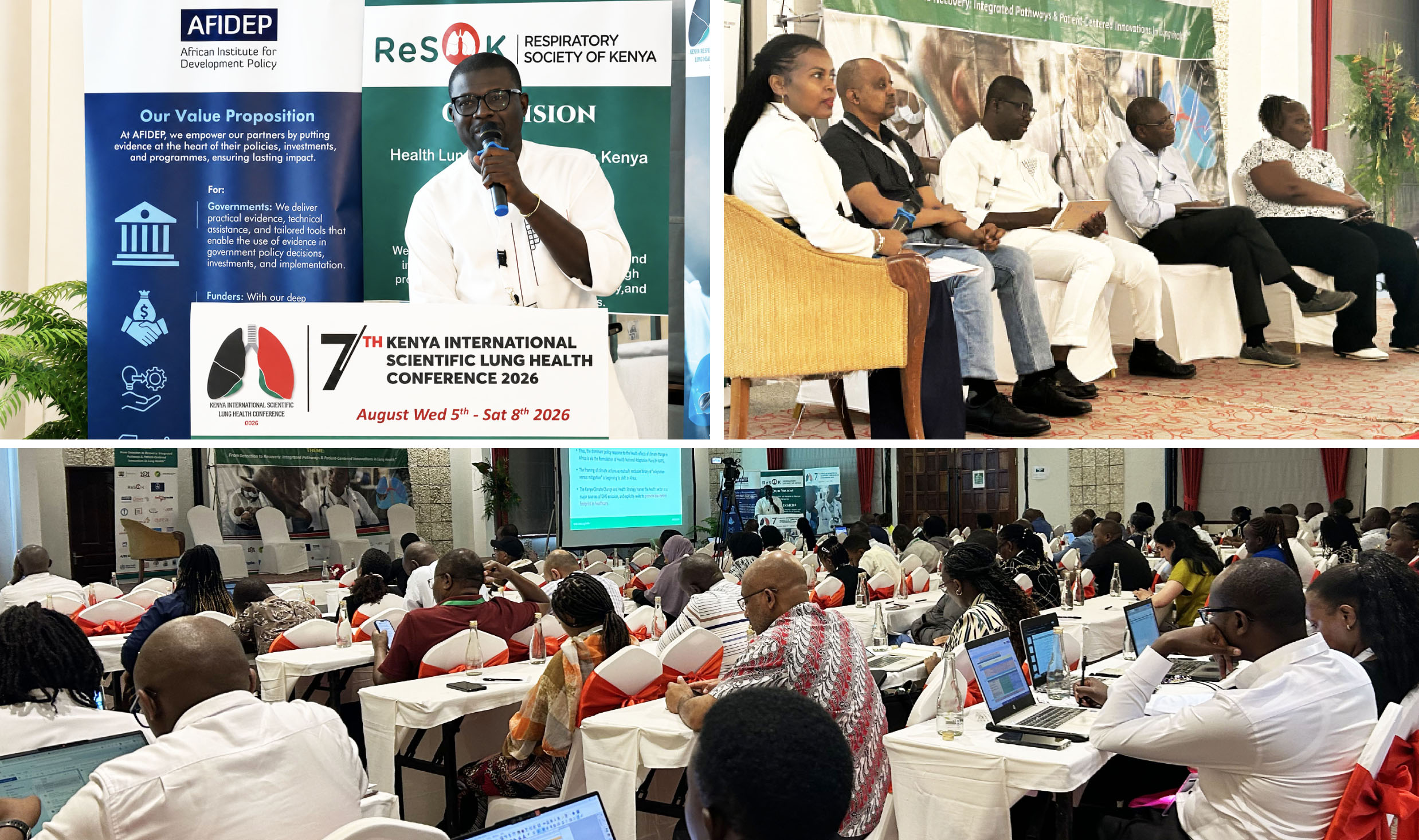
Respiratory diseases such as asthma, chronic obstructive pulmonary disease, pneumonia, and tuberculosis (TB) remain major causes of illness and death in Kenya, with evidence showing to a rising burden, driven partly by urbanisation and air pollution.
The 7th Kenya International Scientific Lung Health Conference, held from August 5 to 8, 2026, at Diani Reef Hotel, Mombasa, under the theme “From Detection to Recovery: Integrated Pathways and Patient-Centred Innovations in Lung Health,” brought together stakeholders to accelerate progress towards ending the TB epidemic by 2030 and improving lung health.
The conference was organised by the Respiratory Society of Kenya (ReSoK), in collaboration with the Ministry of Health’s Division of National Tuberculosis, Leprosy and Lung Disease Program (NTLD-P), Centre for Health Solutions-Kenya, AFIDEP, WHO, University of Nairobi, KEMRI, the Network of TB Champions in Kenya, Stop TB Partnership Kenya, Clinton Health Access Initiative (CHAI), Amref Health Africa, Kenyatta National Hospital, and other partners, to confront the growing burden of respiratory disease in Kenya and the region. It served as a platform for sharing the latest research and clinical developments in lung health.
Participants included clinicians, nurses, paediatricians, physicians, radiologists, policymakers, TB programme managers, laboratory experts, digital health specialists, researchers, public health officers, and civil society organisations, who debated key challenges and solutions and shared their expertise.
Speaking during the opening ceremony, Dr Abdullahi Omar, Acting Head of Programme at NTLD-P, noted that “we are witnessing increasing cases of asthma, chronic respiratory diseases, lung cancer, and health challenges linked to air pollution, climate change, tobacco use, and other environmental risks.” These realities, he emphasised, demand a more integrated approach to lung health, one that connects clinical care with the environmental and policy conditions driving disease in the first place.
That call for integration set the stage for one of the conference’s plenary sessions, delivered by AFIDEP’s Senior Research and Policy Analyst and Acting Head of the Environment and Climate Change theme, Dr Nurudeen Alhassan. His presentation, titled “Integration of Health into Climate Policies and Actions in Africa: Examining Current Framings and Their Implications,” made an urgent, underappreciated case, the words used to describe the climate crisis may matter almost as much as the policies written in response to it. Policies exist but sit unused or unknown because they haven’t been communicated in language that resonates with the people affected by them.
Evidence shows that in 2019, air pollution was Africa’s second leading risk factor for death, claiming an estimated 780,000 lives. Behind that statistic lies a structural problem as the health sector itself, generates roughly 10% of Africa’s annual greenhouse gas emissions. Climate change and health are not parallel crises but entangled ones, each accelerating the other, and disproportionately punishing communities already carrying the heaviest burden of inequality. Yet policy responses remain fragmented, with health and climate too often confined to separate ministries and separate budgets.
Dr Alhassan’s presentation centred on framing which is the way an issue is presented and understood by policymakers, implementers, and the communities who live with the consequences. As part of the implementation of the Pathfinder II initiative, framing was identified early on as one of the most critical, and most neglected, levers in Africa’s climate-health response. How a government describes the link between a coal-fired plant and a child’s asthma shapes whether that link becomes a funding priority or simply another line in an unread report.
Framing links agendas that bureaucracies keep artificially separate; it unlocks integrated funding rather than two thin, competing budgets; it builds political will by making climate messaging immediate and personal; it strengthens communication and compliance by helping people see their own stake in policy; and it exposes the inequality that climate change deepens for the continent’s most vulnerable.
Africa’s climate policy landscape has long been organised around a divide between adaptation and mitigation, with health responses formalised mainly through Health National Adaptation Plans that treat health as something to protect from climate change, rather than something climate action can actively improve. Kenya’s own Climate Change and Health Strategy 2024-2029, developed with technical support from AFIDEP and the London School of Hygiene and Tropical Medicine (LSHTM) in collaboration with the Kenyan’s Ministry of Health, explicitly names the health sector as an emissions source and commits to a lower-carbon footprint in healthcare, a small but significant signal that climate and health are converging into a single agenda.
In enhance this agenda, earlier on, AFIDEP’s Pathfinder Initiative II convened a virtual workshop on March 25, 2025 with 28 specialists from across Africa’s climate-health policy landscape, seeking better language for communicating pathways to a low-carbon future that also delivers public health benefits. The findings were candid showing that the current framing leans heavily on the negative such as disease, death, and disruption while saying too little about the wins. Participants called for win-win narratives, relatable community language over technical jargon, and framing broad enough to capture livelihoods and wellbeing, not just clinical outcomes.
The workshop also identified four arenas where climate action and health improvement are the same goal wearing two names:
- Urbanisation: A rare chance to build climate-smart cities that are health-smart by design.
- Household energy transition: Cleaner cooking fuel cuts emissions and protects lungs in the same motion.
- Waste management: Better systems mean fewer floods and fewer disease outbreaks.
- Transport: More commuting options mean lower emissions and healthier populations.
Dr Nurudeen Alhassan during AFIDEP’s Pathfinder Initiative II workshop on March 25, 2025 with 28 specialists from across Africa’s climate-health policy landscape, seeking better language for communicating pathways to a low-carbon future that also delivers public health benefits.
AFIDEP’s seat at this conference reflects its mission of closing the gap between rigorous evidence and the decisions that shape African lives. The Pathfinder Initiative II realises the language gap between climate policy and public health. Evidence confined to a policy brief changes nothing, but evidence that reaches clinicians, policymakers, and the communities who live with both outcomes has a chance to bend the trajectory of a continent’s health. The conference issued a call to build the coalitions and shared language needed to move climate-health integration from framework into practice.
Download the Kenya Climate Change and Health Strategy 2024-2029 here: https://shorturl.at/Olalo