

News
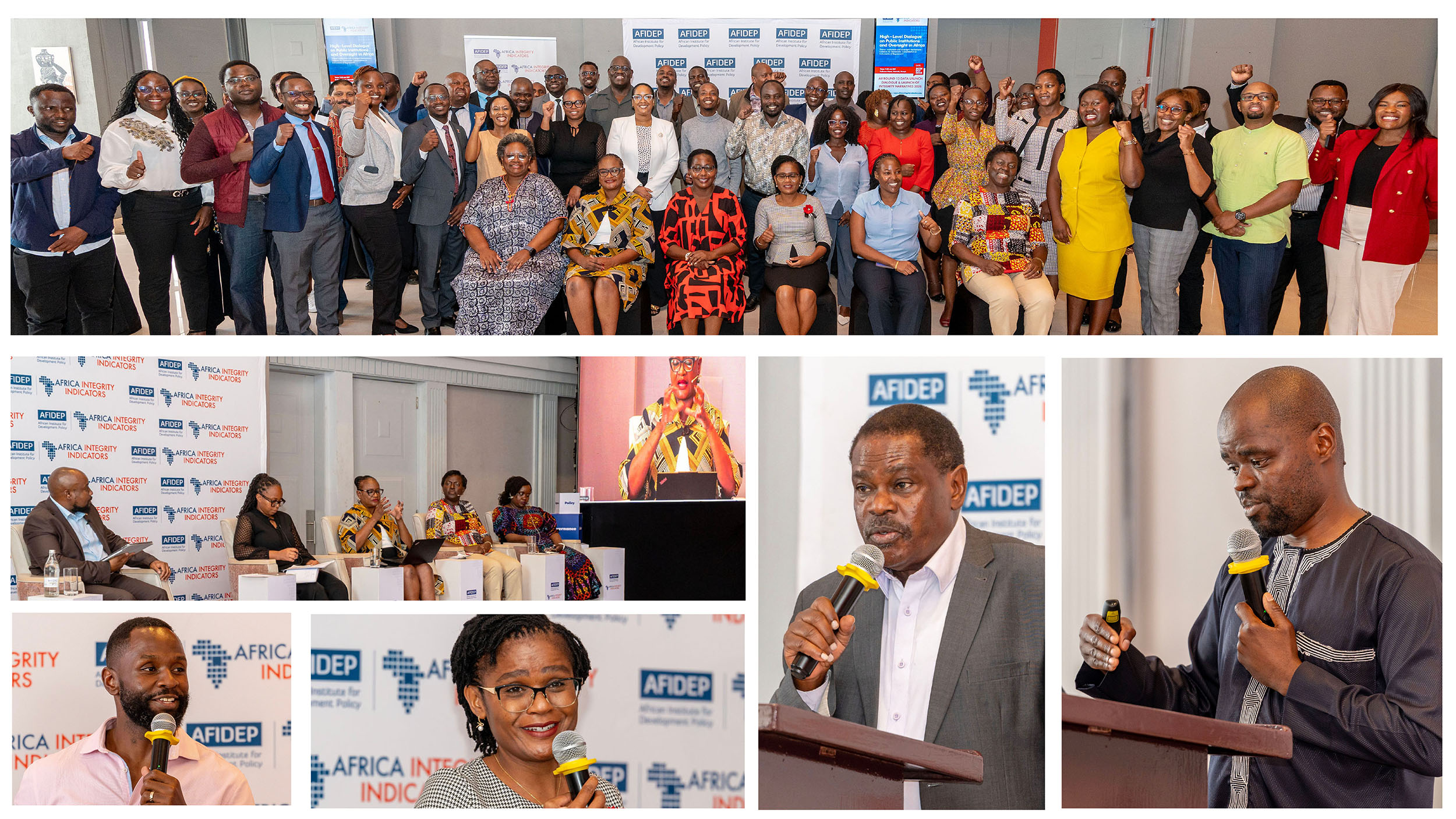
NAIROBI, Kenya, October 28, 2026: Africa does not lack the constitutions, commissions and legal safeguards needed to hold power to account. What it lacks is the will to make them work. That was the stark message from governance leaders, oversight bodies, civil society and young people at the High-Level Dialogue on Public Institutions and Oversight in Africa, convened at the Pullman Nairobi Upper Hill by the African Institute for Development Policy (AFIDEP) with support from the Mo Ibrahim Foundation.
The High-Level Dialogue marked the official launch of the Africa Integrity Indicators (AII) Round 13 scorecard and its flagship report, Integrity Narratives 2026. Unlike rankings that measure what the law says, the AII assess how transparency, accountability and social development work in practice across all 55 African Union member states. Held under the theme Institutions and Oversight Mechanisms: Catalysts for Democratic Consolidation or Instruments of Regression?, the hybrid event brought together about 100 participants in person, with many more joining online.
The timing is critical as Africa has seen a resurgence of unconstitutional changes of government since 2020, the manipulation of term limits and shrinking civic space, even as courts, electoral bodies and auditors elsewhere have upheld the rule of law and enabled peaceful transfers of power.
Hon. Yvonne M. Chibiya, Vice Chairperson of the African Union Advisory Board on Corruption (AUABC) from Zambia, who joined the official launch, said the findings give Africa’s anti-corruption effort exactly what it needs.
“High-quality, in-practice data is essential for driving evidence-based policy reforms,” said Hon. Chibiya. “By moving beyond mere rankings to explore the drivers behind governance performance, we can better identify intervention points and strengthen the institutional frameworks needed to combat corruption and consolidate democracy across the continent. Lifestyle audits are a good tool for fighting corruption and they can serve as a deterrent for public officials to know that they are constantly under scrutiny. We commend AFIDEP and all partners for this vital work, and we look forward to translating these findings into actionable reforms for a more transparent and accountable Africa.”
Delivering the keynote address, John Githongo, Chief Executive Officer of Inuka Kenya Ni Sisi!, founding Executive Director of Transparency International Kenya and former Permanent Secretary for Governance and Ethics, cut to the heart of the matter. “We have exhausted the technical and legal frameworks for the governance challenge. The problem is not what we lack, but what we refuse to do,” said Mr Githongo. “On paper we have everything; the integrity indicators show this. The problem is not design but implementation.”
Presenting the Round 13 findings, Dr Alex Nester Jiya, Research and Policy Analyst – Acting Theme Lead, Governance and Accountability at AFIDEP said the evidence points reformers to where action is most urgent. “The Africa Integrity Indicators were built to measure what happens in practice, not what the law promises,” said Dr Jiya. “Round 13 shows that the distance between the two remains the defining governance challenge on our continent. That gap is where reform must begin, and this data shows governments, oversight bodies and citizens exactly where to look.”
Dr Rose Oronje, AFIDEP’s Deputy Executive Director, called on leaders to treat governance as a development priority in its own right. “Governance is not one of the components of development. It is the precondition for sustainable development; it is that which enables a continent to develop,” she said.
Speaking for Kenya’s Commission on Administrative Justice (Office of the Ombudsman), Dr Mary Kimari said the country’s constitutional architecture must now deliver tangible results. Likening oversight institutions to a snail, Dr Kimari said, Kenya’s independent commissions carry their “house” with them: the constitutional mandate, legal safeguards and due-process requirements that protect them and keep them standing under political pressure. That is why they are never “homeless.” But that same weight makes them slow.
“The Constitution of Kenya established a strong foundation for governance, and Kenya has made considerable progress. Strong institutions are indispensable. Our task now is to ensure that these frameworks translate into real change for people’s lives to be transformed,” she said. “Access to information requires proper implementation, and public confidence depends
on visible results. Our citizens are at the centre of public performance, and we seek to ensure that the process is undertaken fairly.”
The voice of young Kenyans was unmistakable. Yvonne Abungu, Advocate of the High Court of Kenya and youth representative, warned that public trust has been badly eroded.
“The reality on the ground is that the trust has been broken between the youth and government. When somebody lies to you every single time, the ripple effect is that you will not trust them again,” said Ms Abungu. “We have a large demographic of young people who are unemployed. The 2024 GenZ protests were a call for change. Right now, Kenyan youth are organising themselves to face these people on the ballot. Youth are re-strategising from protests to the ballot.”
With Kenya’s General Election set for 10 August 2027, the afternoon Kenya Governance Work Laboratory turned evidence into action. Led by John Allan Namu, founder of Africa Uncensored and featuring the Office of the Controller of Budget, the Commission on Administrative Justice, Mzalendo Trust and youth voices, participants used live polling to rank reforms in audit integrity, anti-corruption, electoral integrity, access to information and inclusion. The agreed priorities will be published in a communiqué and advocacy fact sheet, to be jointly championed by institutions and civil society in the run-up to the polls.
Media and civil society are very key, but for them to play their watch dog role and hold public officials to account, they need a suitable environment. They need access to information and this is still challenging in some of the member states.
At AFIDEP, we believe that when strong-looking institutions fail in practice, people lose services, trust, and democratic gains, so getting real evidence to those who can act on it is what makes accountable government real.
About the Africa Integrity Indicators (AII): First published in 2013 and produced by AFIDEP since 2022 with funding from the Mo Ibrahim Foundation, the AII track 58 in-practice indicators on transparency, accountability and social development across all 55 African Union member states. The data are a key primary source for the World Bank’s Worldwide Governance Indicators and the Ibrahim Index of African Governance. The Round 13 scorecard and full dataset are available at www.africaintegrityindicators.org.
About AFIDEP: The African Institute for Development Policy is an African-led research and policy institute that bridges evidence and policy to drive sustainable development across the continent.