


Blogs
Introduction
Despite significant progress in addressing gender inequalities in the planning, formulation, and implementation of fiscal policies in Kenya, challenges remain in achieving gender-responsive budget allocations. Many policymakers and practitioners still lack the practical knowledge and skills needed to effectively integrate gender considerations into budgeting processes, thereby addressing structural gender disparities and promoting inclusive development.
To help address this gap, a series of training workshops was conducted to strengthen participants’ understanding and application of gender-responsive budgeting (GRB) principles in planning and budgeting processes, ensuring that gender needs, gaps, and priorities are adequately addressed.
The Training Workshops
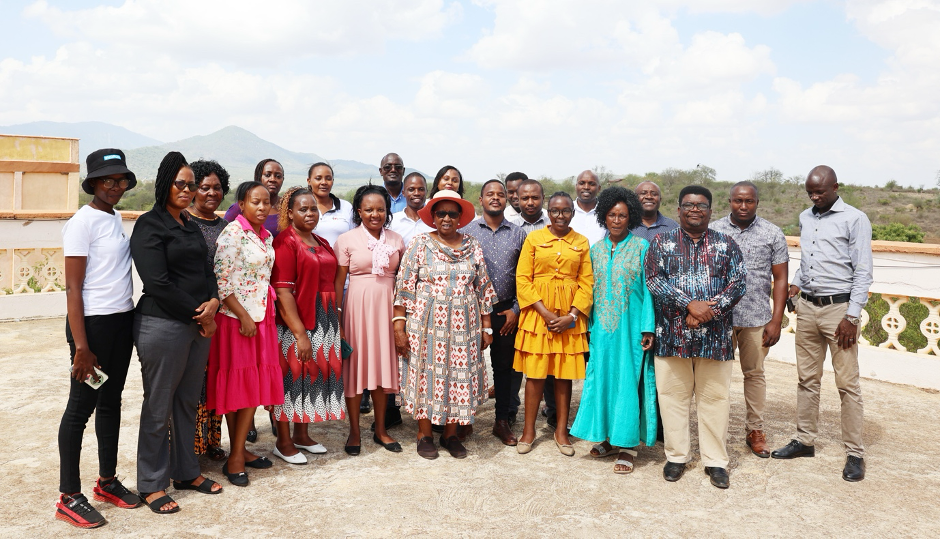
The workshops were conducted in 2025 across five Kenyan counties: Kakamega, Kisii, Nyeri, Isiolo, and Taita Taveta, and involved a total of 123 participants from key government departments, including planning, social development, health, agriculture, trade, and industry.
Capacity strengthening is a critical step toward achieving gender-responsive planning and budgeting at both National and County levels. However, a key question often remains: Did the training improve participants’ knowledge and skills?
To answer this, participants completed short knowledge assessments before (pre-test) and after (post-test) the training.
What the Pre-Test Revealed
The pre-test results showed that, on average, only 13% of participants had attended a similar training in the previous three years, indicating limited prior exposure to GRB concepts.
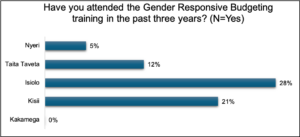
Participants scored an average of 66% across key components of the training, highlighting notable gaps in understanding critical areas such as:
- Basic concepts of gender-responsive budgeting
- Gender entry points within budgeting processes
- Legal and institutional frameworks governing GRB
- Tools and processes for implementing GRB
For example, only 48% of participants correctly identified the stages in the budget cycle at which gender considerations can be integrated, as well as the necessary documentation and timing for gender budget analyses. Additionally, fewer than 60% demonstrated familiarity with the laws and institutionsresponsible for coordinating and implementing GRB.
These findings confirmed the need for targeted training interventions.
Significant Improvement After the Training
The post-test results showed a marked improvement in participants’ knowledge.
The average score increased from 66% in the pre-test to 80% in the post-test, representing a 14-percentage-point gain. Kisii and Taita Taveta counties recorded the greatest improvements, with gains of 17 and 16 percentage points, respectively.
Notable improvements included:
- Understanding of GRB concepts increased from 77% to 85%
- Knowledge of budgeting processes and gender entry points improved from 48% to 63%
- Ability to identify relevant laws and institutions responsible for coordinating GRB increased from 58% to 79%
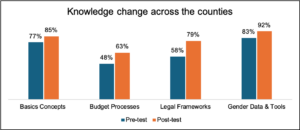
These results indicate that the training significantly enhanced participants’ adeptness to undertake gender-responsive budgeting. The greatest gains were observed in understanding budgeting processes, gender entry points, and the relevant legal frameworks.
Beyond the Numbers
In addition to improved test scores, participants reported increased confidence in applying GRB principles in their work.
One participant noted:
“The training has enhanced my skills in budgeting, especially Gender Responsive Budgeting. From now on, I will champion the integration of GRB in the budgeting process in my department.” – Taita Taveta County
Others highlighted improved ability to mainstream GRB across departments and emphasised the practical relevance of the training:
“I had limited knowledge of GRB, but I can now confidently prepare and analyse budgets from a gender-responsive perspective.” – Isiolo County
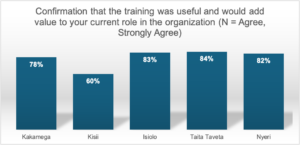
Overall, participants across all counties described the training as informative, interactive, and impactful. They rated the facilitation highly and appreciated the practical approach, including the use of real budget examples.
However, participants also recommended:
- Longer training durations
- Follow-up activities to reinforce learning
- Inclusion of senior leadership in the training arrangement, such as county executives and assemblies
- Scheduling adjustments to avoid low-attendance days, such as Mondays and Fridays
One participant added:
“The workshop met my expectations as it included real budget examples and emphasised coordination between departments, making GRB concepts easier to apply.” – Nyeri County
Conclusion
The pre- and post-training assessments provided a practical means of evaluating the effectiveness of the Gender-Responsive Budgeting workshops across the five Kenyan counties. By measuring knowledge before and after the training, AFIDEP better understood what worked, identified areas for improvement, and determined where additional support was needed.
The results demonstrate that targeted training interventions can significantly enhance participants’ knowledge and readiness to apply GRB principles in budgeting processes to achieve a gender responsive budget.
Moving forward, sustained mentorship and follow-up engagements will be essential to ensure that the knowledge gained translates into tangible improvements in the planning and implementation of gender-responsive budgets in Kenya.