


Blogs
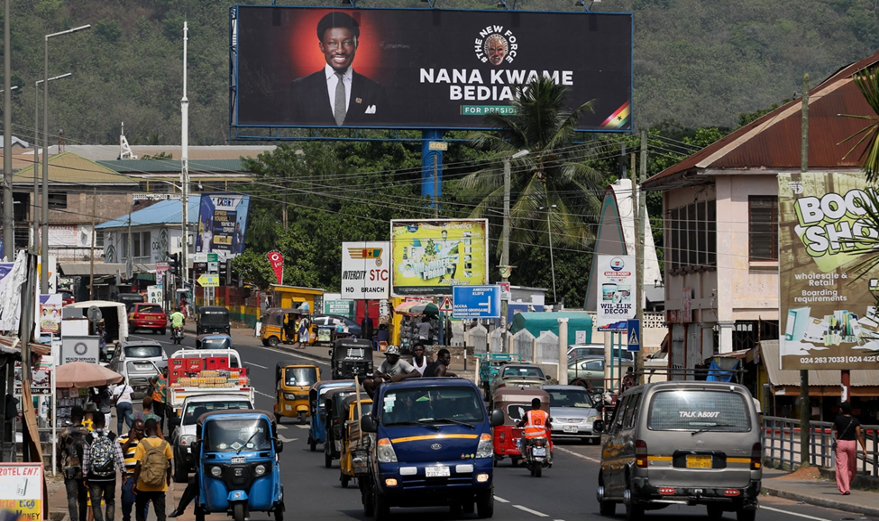
In most West African countries, politics is not just about ideology. It is about whose pockets speak the loudest and who controls government resources. During electoral periods, from Ghana to Senegal, campaign posters cover the streets, millions of dollars are spent, and candidates promise change. But beneath all this lies a question few citizens can fully answer: who is really funding these campaigns?
Recent elections in Ghana and Nigeria have brought renewed discussion of political financing and the opacity of the sources of funding that sustain political campaigns. Citizens continue to ask questions about funding sources, and civil society is demanding clearer answers. And governments, at least on paper, have committed to transparency informed by continental and global anti-corruption instruments, including the African Union Convention on Preventing and Combating Corruption (AUCPCC) and the United Nations Convention Against Corruption (UNCAC). The instruments emphasize the need for countries to have measures in place that enhance transparency in political financing. Although some countries have introduced legal frameworks and made commitments to combat and fight against corruption, the main challenge lies in ensuring that these frameworks and commitments are implemented effectively.
So, what does evidence actually show? Data from the Round 13 of the African Integrity Indicators (AII13) presents evidence on the status of political party financing across West Africa. It reveals not just where progress has been made but also where challenges still exist.
Generally, legal frameworks represent the first layer of accountability in regulating political finance. As shown in the table, all West African countries except Cabo Verde have ratified both the AUCPCC and UNCAC, showing a region-wide commitment to combating corruption. The majority of countries, including Benin, Ghana, Nigeria, and Senegal, among others, have gone further by domesticating these instruments through laws/legal frameworks. In addition to national anti-corruption instruments, there are frameworks requiring political parties to account for and declare their sources of private funding to enhance transparency.
Table: AUCPCC and UNCAC Ratification Status for West African states
| Countries | AUCPCC (Status) | UNCAC (Status) |
| Benin Republic | 20/09/2007 | 14/10/2004 |
| Burkina Faso | 29/11/2005 | 10/10/2006 |
| Cabo Verde | Not Ratified | 23/04/2008 |
| Côte d’Ivoire | 14/02/2012 | 25/10/2012 |
| Gambia | 30/04/2009 | 8/07/2015 a |
| Ghana | 13/06/2007 | 27/06/2007 |
| Guinea Bissau | 23/12/2011 | 10/09/2007a |
| Guinea Conakry | 05/03/2012 | 29/05/2013 |
| Liberia | 20/06/2007 | 16/09/2005a |
| Mali | 17/12/2004 | 18/04/2008 |
| Niger | 15/02/2006 | 11/08/2008a |
| Nigeria | 26/09/2006 | 14/12/2004 |
| Senegal | 12/04/2007 | 16/11/2005 |
| Sierra Leone | 03/12/2008 | 30/09/2004 |
| Togo | 14/09/2009 | 06/07/2005 |
Source: United Nations Office on Drugs and Crime (available at https://www.unodc.org/corruption/en/uncac/ratification-status.html) and African Union (available at https://anticorruption.au.int/en/documents/2021-06-11/status-ratification)
In Ghana, for example, the Political Party Act 2000 (Act 574) prohibits political parties from receiving anonymous or foreign funding and mandates annual financial disclosures to the Electoral Commission. The Act aims to ensure transparency in political financing and accountable sources of funding. Furthermore, the Act requires parties to disclose private donations. However, in practice, political parties and candidates rarely disclose who is financing them and the amounts they receive in donations. While there might be general public knowledge on their sources of funding, official information is often inaccessible for public scrutiny. This is further evidenced in the data from Round 13 of the African Integrity Indicators, which reveal significant implementation gaps, with the majority of political parties in Ghana failing to disclose private donations, including their sources, for public scrutiny.
Similarly, in Nigeria, political financing is regulated by the Electoral Act 2010, which was recently amended to the Electoral Act 2022. The Act has provisions for parties to declare private donations and aims to enhance transparency, fairness, and credibility in Nigeria’s democratic process. The Nigerian Independent National Electoral Commission (INEC) is responsible for overseeing the regulation of the provisions to ensure its alignment with international democratic standards and strengthen the electoral integrity in the country. Notwithstanding, data from the Africa Integrity Indicators on political financing reveal below-average performance (scoring 0 since 2019), and a majority of political parties still consistently fail to disclose private donations and sources of political financing.
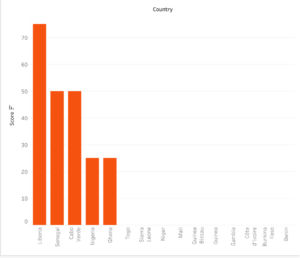
Figure 2: Cumulative Scores showing the Status of Private Political Financing Disclosures in West Africa from 2014-2026 (AFIDEP, 2026)
Figure 2: Cumulative Scores showing the Status of Private Political Financing Disclosures in West Africa from 2014-2026 (AFIDEP, 2026)
Indicator (Indicator 51) measures: In practice, political parties regularly disclose private donations and the disclosures are easily available to the public. Scoring criteria: A 100 score is earned where all the following conditions are met: 1) political parties disclose private donations within a one month of receipt, and 2) they are easily available online or at a cost of photocopy. A 50 score is earned where any of the following conditions apply: 1) political parties don’t always disclose private donations or disclose them more than a month of received, or 2) disclosures are not available online or the cost of paper versions is higher than photocopying. A 0 score is earned where political parties rarely disclose private donations.
Senegal, on the other hand, has been performing somewhat better at disclosing private donations than other countries in the region, although it remains below average. It had been scoring 0 between 2014 and 2024, and saw a score increase to 25 in 2024 as political parties actively communicated the funds they raised through extensive use of crowdfunding and member contributions on the internet. Senegal enacted a law in 1981 to regulate political parties, particularly Law No. 81-17, which governs the formation, operation, and recognition of political parties in Senegal. The regulatory framework stipulates that political parties must declare private donations, bequests, and contributions received from their members and supporters. It also prohibits any funding from abroad or from foreigners residing in Senegal.
Data suggest that most legal frameworks in the region establish only symbolic commitments rather than effective mechanisms to ensure transparency. Thus, on paper, almost all West African states have national laws requiring political parties to disclose their sources of political financing for public scrutiny and/or to submit their financial reports to the appropriate institutions responsible for overseeing the implementation of these laws. Worse still, party members have little knowledge of the sources of private funding for their parties and how the funds are used.
As shown from the map below, based on the Round 13 data of the Africa Integrity Indicators, lack of transparency in political financing is not unique to West African countries; across Africa, political party financing remains a persistent source of ambiguity in ensuring transparency, electoral integrity, and international democratic standards.
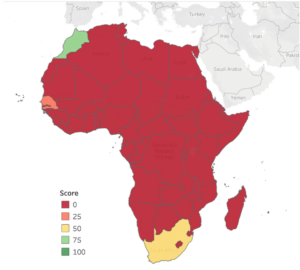
Figure 1: The status of private political financing transparency in Africa in 2025 based on data from Round 13 of the Africa Integrity Indicators (African Institute for Development Policy, 2026)
Note: Each indicator has a set of detailed criteria corresponding to each possible score. A 100 translates into ‘Very Strong’, a 75 into ‘Strong’, a 50 into ‘Moderate’, a 25 into ‘Weak’ and a 0 into ‘Very Weak’.
In practice, as is also the case in West Africa, African institutions enforce those laws only partially, and political parties demonstrate weak compliance with requirements to publish their sources of funding to enhance electoral transparency, a challenge that remains.
Political campaigns across West Africa increasingly require significant financial resources. Such needs create incentives for parties and candidates to rely on various sources of funding, including wealthy individuals, business networks, and political patrons. And when there is a lack of transparency about who funds political parties, voters fail to effectively evaluate whether policy decisions reflect the public interest or are influenced by private donors.
Regulatory frameworks and effective enforcement require strong institutions, which could significantly improve transparency in political financing. Strengthening political finance transparency in West Africa, thus, requires coordinated reforms that address both legal frameworks and institutional capacity. Governments across the region should strengthen disclosure laws by establishing clear requirements and stronger institutions to regulate political parties and require them to report private donations regularly.
Electoral commissions and other relevant institutions responsible for regulating funding to political parties must have stronger independence and sufficient resources to audit party finances effectively and enforce compliance with reporting requirements. Although some institutions have legal authority, their independence remains fragile. In particular, the procedures for appointing senior leadership require strengthening, as often the processes involved are subject to political interference. The interference results in appointees who are loyal to those who selected them, thereby undermining the institutions’ ability to operate independently. Governments should also establish accessible digital databases where political finance disclosures can be published and easily accessed by citizens, journalists, and civil society organisations. Nonetheless, civil society actors and investigative journalists must continue to monitor political financing practices and raise public awareness about the importance of transparency in democratic governance.
Political finance transparency ultimately represents a critical test of democratic resilience in West Africa. Effective enforcement mechanisms and sustained public demand for accountability will unrisks entrenched clientelism and undermine democratic governance across the region. West African democracies must therefore move beyond symbolic commitments and embrace genuine transparency in political party financing if they hope to strengthen public trust and safeguard the integrity of their political systems.