


Blogs
Every year, between 800,000 and one million young Kenyans enter the labour market, yet the formal economy created only 78,600 jobs in 2024. While youth unemployment remains above 35 per cent, an even greater concern is the quality of available work, with more than 80 per cent of employed youth earning a living in the informal economy, often without written contracts, social protection or income security.
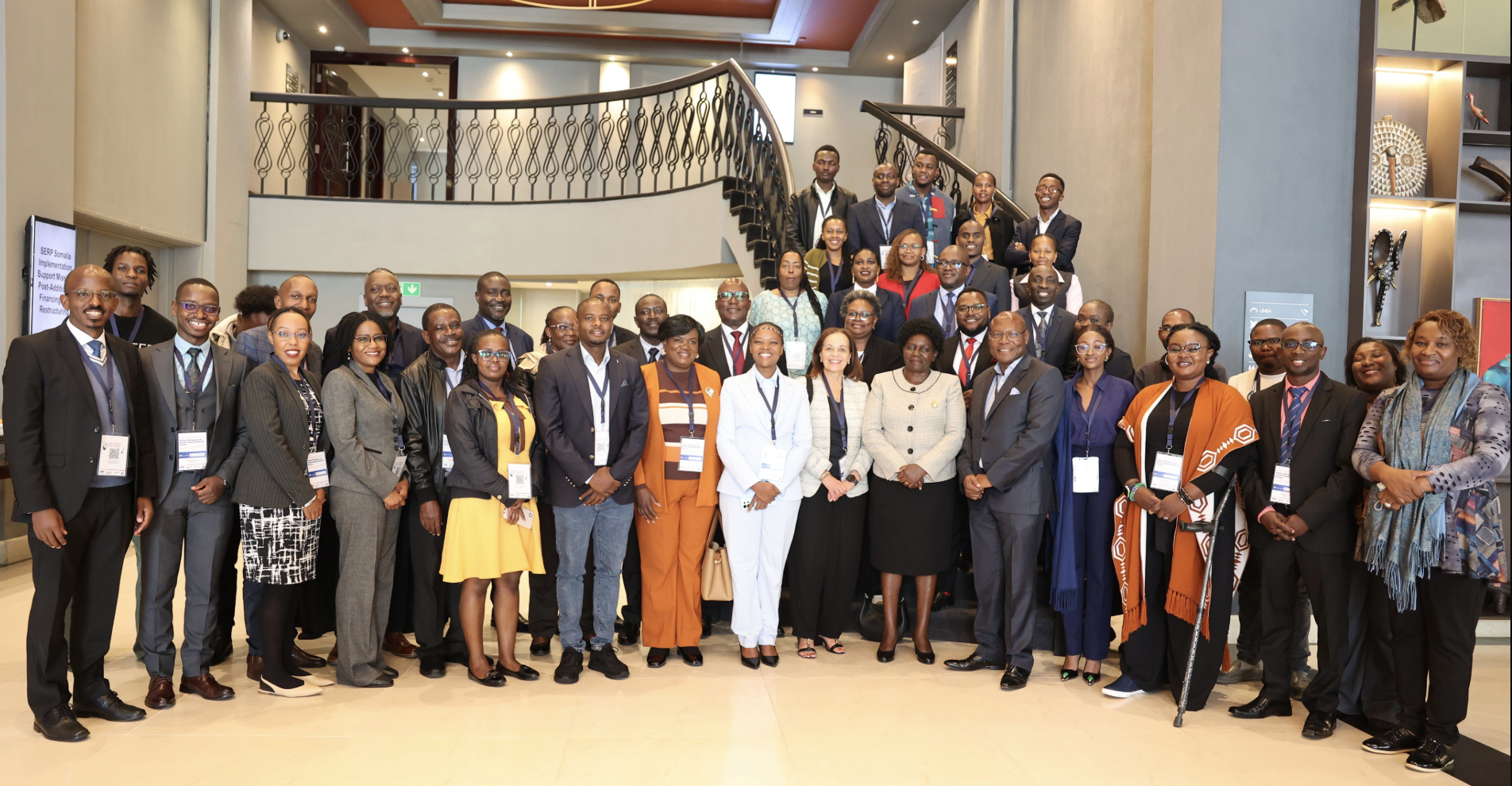
These sobering realities set the tone for the Policy Dialogue on Youth Employment in Kenya, a dissemination forum held on 18 June 2026 at the Pullman Nairobi Upper Hill. Convened under the Youth Futures Policy Research Project by the African Institute for Development Policy (AFIDEP), the CAP Youth Empowerment Institute, the National Youth Council (NYC) and the National Gender and Equality Commission (NGEC), the forum brought together 59 participants, government officials, senators, private-sector leaders, development partners, researchers and youth representatives, a third of whom were young people themselves, to translate findings from the Political Economy Analysis (PEA) of Youth Employment in Kenya into concrete commitments.
Political Economy Analysis (PEA) of Youth Employment in Kenya.
Understanding the real challenge
Opening the dialogue, Dr. Rose Oronje (Deputy Executive Director, AFIDEP) posed the question that framed the day: unemployment remains persistently high despite a dense policy architecture, so where is the disconnect? Elizabeth Lule (Chairperson, AFIDEP Board), formally launching the PEA report, described youth employment as a multifaceted crisis spanning economics, security, governance, education and social inclusion, and urged participants to engage candidly and focus on actionable solutions.
The discussions challenged the common perception that youth unemployment is simply a job-creation problem. Participants agreed that Kenya’s employment crisis reflects deeper structural challenges that require better coordination, stronger institutions and a more deliberate focus on creating quality jobs, even though the country has introduced numerous initiatives under Vision 2030, the Bottom-Up Economic Transformation Agenda (BETA), TVET reforms and digital economy strategies.
Presenting the PEA findings, Joshua Magero (AFIDEP) noted that Kenya has commissioned numerous policies and programmes that appear not to be working. Drawing on a methodology combining secondary data with a gig-economy survey of 1017 young people, about half of whom rely on gig work, the presentation showed that youth employment is concentrated in agriculture and informal trade, sectors that nonetheless receive a fraction of national financing once debt servicing, which absorbs roughly a quarter of the budget, is accounted for. Six themes emerged from the analysis: youth preparedness, the informal economy, productivity, trade and industrialisation, the digital and gig economy, and implementation and coordination, with equity and inclusion identified as a cross-cutting priority throughout.
The dialogue observed that the problem is not a lack of solutions, but weak implementation, fragmented institutional mandates, inadequate financing and limited accountability. The presentation’s headline recommendation, described as “the big ask,” was the establishment of a presidential-chaired, cross-ministerial youth employment coordination platform, alongside making training demand-led, shifting the policy emphasis from formalisation toward making informal work productive and protected, and ensuring the gig economy is covered by both social protection and proportionate taxation.
Recognising this implementation gap, participants proposed a Youth Jobs Compact, an action framework to align policies, designate lead institutions, and secure binding commitments, timelines and accountability mechanisms across government, the private sector, development partners and youth themselves.
Hearing from young people themselves
Jackline Muya, of the National Gender and Equality Commission’s Youth Advisory Committee, grounded the statistics in lived experience, reminding participants that behind every figure on informality is a relative, friend or cousin working in public transport, jua kali or as a mama mboga. Drawing on her own experience earning up to KES 69,000 a month through online transcription and AI training-data work, often via VPNs because global platforms restrict access from Africa, she described the digital gig economy as lucrative but precarious, marked by sudden account closures and no legal protection or social security. Her call was direct: stop treating the gig and informal economies as “waiting rooms” for formal jobs, and instead meet young people where the work already is.
Building a labour market that works for young people
The dialogue called for a shift in how youth employment is framed: rather than a social welfare concern, participants argued it should be recognised as an investment in productivity, enterprise and long-term growth, a framing echoed in the keynote address by Fred Murimi (Centum Capital), delivered on behalf of Dr James Mworia, which argued that sustainable job creation depends on rapid private-sector expansion, a competitive business environment, and deeper global market integration for Kenya’s digital and professional talent.
Senate voices reinforced the coordination gap. Senator Prof. Margaret Kamar (Vice Chair, Senate Committee on Education) flagged that county governments are diverting devolved vocational-training funds to cover non-devolved bursaries, leaving Vocational Training Centres underfunded, and called for curricula that reflect emerging fields such as robotics, AI and the green economy. Senator Catherine Mumma (Vice Chair, Senate Committee on Devolution) argued that dignified work should be defined by a livable income rather than formal-sector prestige, and called on national and county government to be held accountable for employment outcomes, not just budget expenditure.
Another recurring theme was the disconnect between education and labour market needs. Participants, including Joseph Ogutu of the Safaricom Foundation and Martin Gathu of NairoBits, emphasised that the problem is not simply a shortage of skills but weak alignment between training institutions, employers and emerging industries, calling for a demand-driven skills-to-work system built on apprenticeships, workplace learning and continuous reskilling, designed with young people rather than for them.
Findings from the PEA reveal that informal work is no longer a temporary stage of employment; it is the primary labour market for most young Kenyans. Stakeholders urged policymakers to improve productivity and earnings in the informal economy through better access to finance, markets, business development services and social protection. The rapidly expanding digital and gig economy featured prominently too, with participants calling for a legal and regulatory framework that protects platform and AI-training-data workers while enabling digital work to become a genuine pathway to sustainable livelihoods.
Looking ahead, participants agreed that Kenya’s economic growth should become more labour-intensive. Agriculture, agri-processing, manufacturing, leather, the blue economy, construction, business process outsourcing and digital services were identified as sectors with significant potential to create jobs at scale, illustrated by Mwika Kiarie’s account of youth-led enterprises already manufacturing globally recognised leather goods and accessories. Participants recommended industrial and trade policies that incentivise firms to create employment, invest in youth skills, and expand opportunities for youth-led enterprises.
Conclusion
The dialogue concluded with a shared recognition that addressing youth unemployment requires coordinated national employment efforts connecting economic policy, industrialisation, skills development, private investment, enterprise support and social protection. The proposed Youth Jobs Compact emerged as the dialogue’s defining outcome, a practical platform for turning evidence into coordinated action, anchored by designated lead institutions, binding commitments and measurable timelines. More than 86 per cent of participants rated the dialogue as effective in generating actionable ideas and strengthening stakeholder engagement, though many urged that the next phase prioritise implementation over further discussion.
In his closing remarks, public policy expert Raphael Obonyo urged stakeholders to treat the partnership formed through the forum as a continuing priority rather than a one-off convening. AFIDEP’s Executive Director, Dr. Eliya Zulu closed proceedings with a reminder that captures the spirit of the day: “skills are built to enable youth to escalate.”
Whether that ambition translates into meaningful employment gains will now depend on sustained political commitment and effective implementation, but for participants, the dialogue marked a turning point, from diagnosing Kenya’s youth employment challenge to building consensus around practical, evidence-informed solutions that can help more young people access decent and dignified work.