
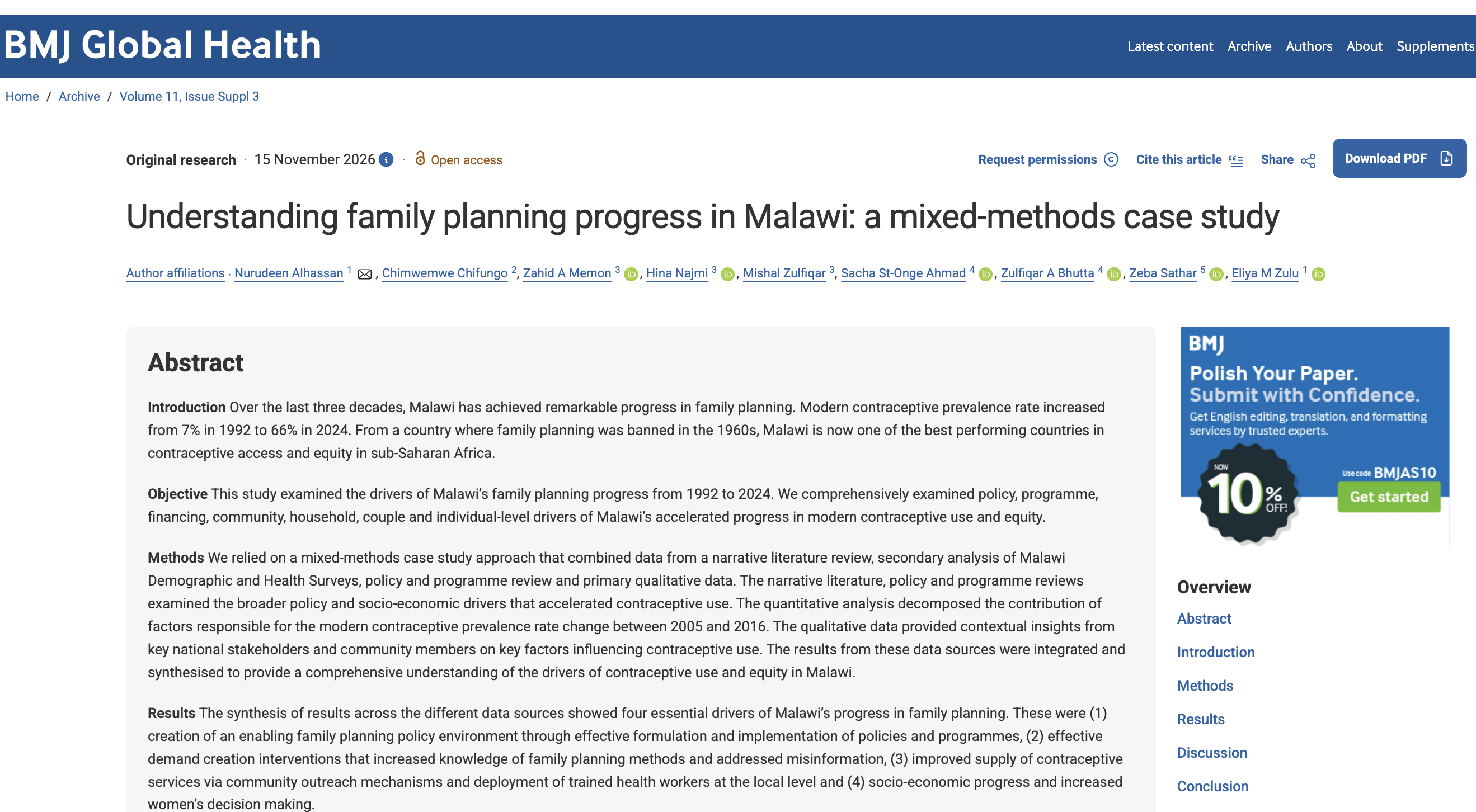
Malawi has seen one of the most remarkable turnarounds in family planning in sub-Saharan Africa. Modern contraceptive use rose from 7% in 1992 to 66% in 2024, in a country where family planning was banned in the 1960s. This study examines what made that progress possible.
Using a mixed-methods case study that combines a literature review, policy and programme analysis, Demographic and Health Survey data, and interviews with national stakeholders and community members, the authors identify four key drivers:
- A supportive policy environment, with policies that were both well designed and well implemented
- Demand creation efforts that improved knowledge of contraceptive methods and countered misinformation
- Better access to services through community outreach and trained local health workers
- Socio-economic progress and women’s growing role in decision making
The findings offer practical lessons for other low- and middle-income countries where contraceptive uptake has been slow. In particular, Malawi’s approach of training lower-cadre health workers to provide injectables shows how countries with limited health staff can close gaps in access. Access the full article here
Related Publications