

Blogs
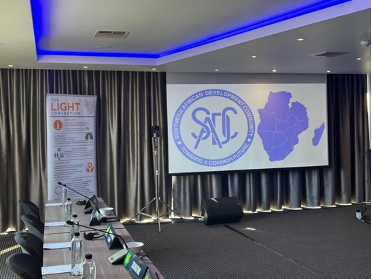
SADC in a snapshot
Southern African Development Community ( SADC ) is a regional organisation bringing together 16 member states to promote cooperation and economic integration in Southern Africa.
One of its objectives is to enhance the standard and quality of life of the peoples of Southern Africa. SADC has a membership of 16 Member States, namely; Angola, Botswana, Comoros, Democratic Republic of Congo (DRC), Lesotho, Madagascar, Malawi, Mauritius, Mozambique, Namibia, Seychelles, South Africa, Eswatini, United Republic of Tanzania, Zambia and Zimbabwe.
How long does it take for evidence to transform into policy? And what role can regional economic communities play in turning research into policy and everyday practice?
The LIGHT Consortium’s engagement with the Southern African Development Community (SADC) brings these questions to life. It charts a path from evidence on gender disparities in TB to regional policy commitments and a reprioritised TB strategic plan. The goal was to turn these commitments into changes in policy and practice across Member States—improving lives and accelerating progress towards ending TB.
What did we do to translate TB and gender evidence into gender-responsive policies and practices in Southern Africa?
As the LIGHT Consortium partner leading regional engagement, the African Institute for Development Policy (AFIDEP) worked with the SADC Secretariat and the SADC End TB Strategy Committee (SETC) in 2025–2026 to translate evidence on gender disparities in TB into regional policy action. Through evidence exchange, policy dialogue and strategic support, LIGHT consortium enabled Member States to identify gender-related gaps in their TB programmes, define practical responses, and commit to integrating gender-responsive interventions, indicators and accountability mechanisms into national policies, strategic plans and funding priorities.
What was the process?
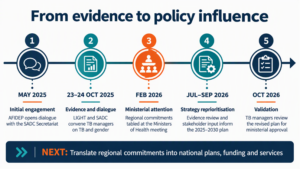
Phase 1: Building relationships and securing commitments
In May 2025, AFIDEP, leading LIGHT’s regional engagement, began virtual discussions and evidence presentations with the SADC Secretariat, placing TB and gender on the TB Managers Meeting agenda.
On October 23–24, 2025, LIGHT and the Secretariat co-hosted evidence exchange, peer learning and policy dialogue. Research findings and experiences from South Africa and Malawi helped Member States identify gender-responsive priorities.
Commitments captured in the 2025 SADC TB report were tabled at the February 2026 Ministers of Health meeting, bringing TB and gender to ministerial attention.
Five areas of regional commitment
- Policy and strategic integration: Embed gender priorities in national TB plans, institutionalise sex- and age-disaggregated reporting and appoint gender focal persons.
- Programmatic implementation: Act on Community, Rights and Gender assessments; expand workplace, community and faith-based screening; strengthen gender, rights and stigma training; and involve affected communities.
- Financing and resource mobilisation: Include gender interventions, indicators and budgets in funding requests, strengthen domestic allocations and engage parliamentarians and TB caucuses.
- Accountability and multisectoral action: Develop TB and gender scorecards and collaborate with gender, labour, education and justice ministries.
- Regional cooperation and follow-up: Integrate commitments into ministerial reporting and strategy revision; review progress through TB Managers Meetings and annual reports.
Phase 2: Turning commitments into strategic priorities
During July–September 2026, LIGHT, through AFIDEP, supported the SADC Secretariat and SADC End TB Strategy Committee to reprioritise the SADC TB Strategic Plan 2025–2030. Consultant Dr Patrick Lungu supported three activities:
- Evidence review: Synthesise TB, gender, equity, financing and service evidence, including mining, mobility and cross-border care.
- Stakeholder assessment: Use a regional questionnaire to assess implementation and propose gender-responsive indicators and disaggregated reporting.
- Strategy revision: Strengthen rights, social protection, financing, childhood and drug-resistant TB, referrals and accountability.
Five findings for policy action
- Close the implementation gap. Equity commitments need gender-responsive service packages, targets, budgets and accountable owners.
- Reach people before treatment. Strong treatment success alongside low coverage in several Member States points to gaps in finding, diagnosing and linking underserved people to care.
- Tailor services to different needs. Working men, miners, migrants, rural communities, carers, adolescents and people with disabilities need flexible hours, locations, specimen options, referral pathways and support.
- Make technology equitable. Molecular diagnostics, portable radiography and digital tools reduce travel and delays only when deployment addresses access gaps and includes maintenance, supplies and care linkage.
- Strengthen financial protection. Transport, food, lost income and unpaid care drive catastrophic costs. TB programmes need links to social protection and occupational compensation.
Phase 3: Validation—and the bridge to practice
In October 2026, AFIDEP joined the Annual TB Managers Meeting, convened by SADC and the Committee with Gates Foundation support. The meeting supported validation, review of 2025 country data and finalisation for ministerial approval, and recommended modelling interventions and country scenarios.
Next steps are TB programme reviews, national plan updates and Global Fund Grant Cycle 8 preparation and implementation—linking gender-responsive services, cross-border care and disaggregated data with budgets and monitoring.
Impact of the policy engagement with SADC
Influence achieved; implementation is the next test
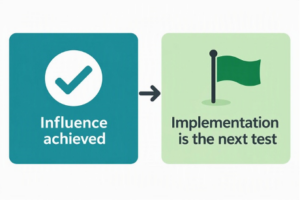
Sustained engagement connected evidence, dialogue and strategic revision. Policy influence is evident; service and health outcomes remain to be demonstrated. The next test is funded, measurable national action with regional support and accountability. This engagement offers a model for evidence-informed regional policy change!
Acknowledgements: SADC Secretariat (Dr Lamboly Kumboneki and team); the SADC End TB Committee, chaired by Professor Nobert Ndjeka; and Dr Patrick Lungu (consultant), and the SADC member states TB managers.